Moving to Bali comes down to nailing six decisions in the right order: arrive on a 60-day C1 visa (the old B211A), extendable up to 180 days; book short-term accommodation before signing any long lease; activate a Telkomsel SIM; rent a scooter only if you hold an International Driving Permit with the category A stamp; open a local account or lean on Wise; and take out international health insurance. Realistic solo budget for a comfortable life: 1,300 to 2,850 USD a month.
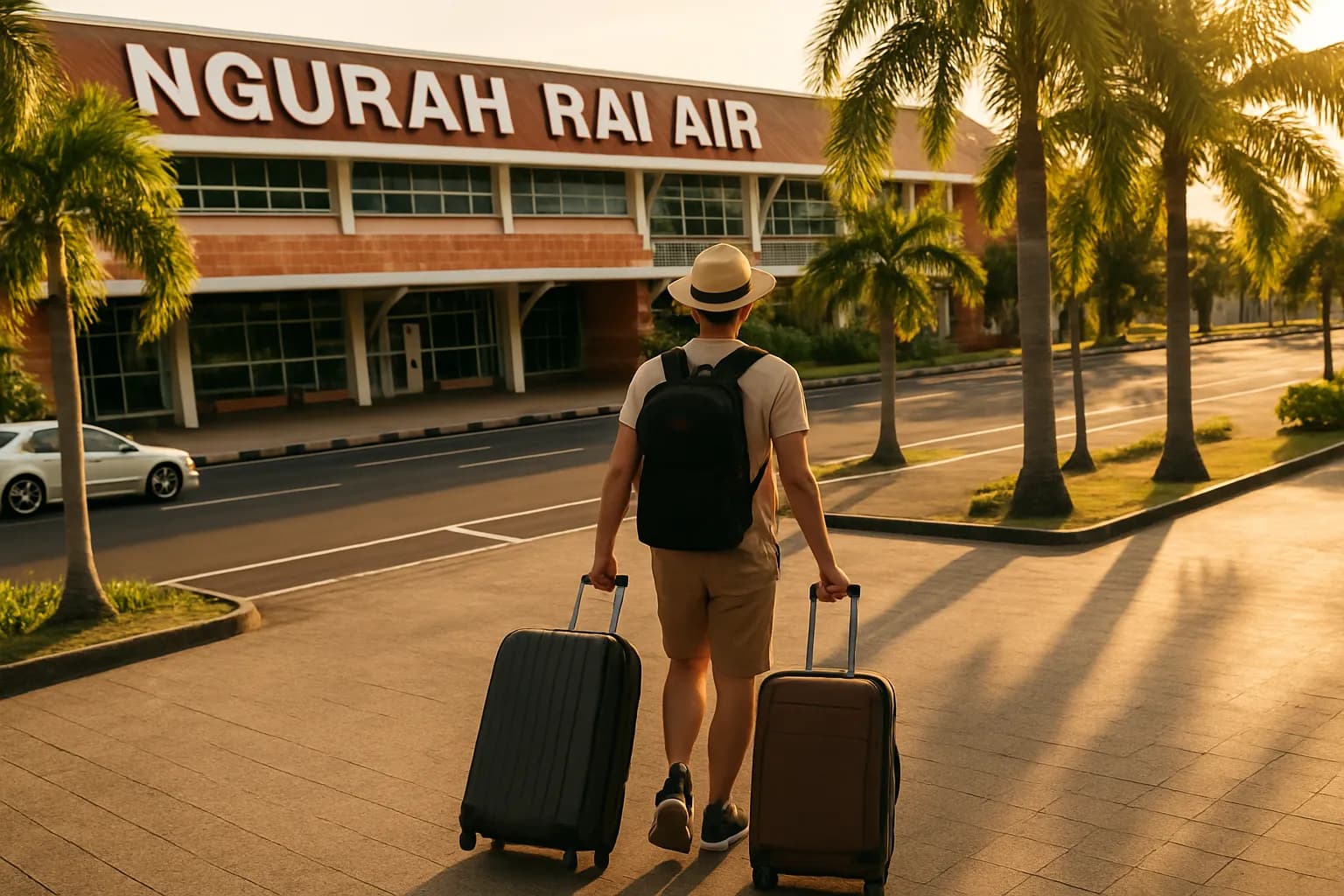
Moving to Bali looks effortless on paper — book a flight, line up an Airbnb, and off you go. The reality has more moving parts. Between the visa clock, the lease you sign by hand, the SIM card you actually have to register, the scooter you're better off renting before buying, and the health insurance everyone forgets about until the first accident, there are six decisions to make in the right sequence, each with its own details. This guide is the honest roadmap: the stuff we wish someone had told us before we landed at Ngurah Rai.
Before you arrive: visa, budget, mindset
The visa is brick number one
Sort your visa before anything else. The C1 visa — officially renamed on 9 January 2024, though everyone still calls it the "B211A" — is the simplest gateway for a first stay. It grants 60 days, extendable twice for 60 days each, for a maximum of 180 days on the ground. Since 29 May 2025, an in-person visit to the immigration office is mandatory at every extension: they take your photo and an officer interviews you. Going through an agency, budget roughly IDR 2 to 2.5 million for the initial visa (about EUR 99 to 123 at the ECB rate of 23 October 2026), plus a fee per extension. This visa needs no sponsor (except for stateless people, holders of non-national travel documents and certain nationalities): if you use an agency, never sign anything blind, and always work with a provider with a solid local reputation. Visa categories, conditions and official procedures are published by the Indonesian Directorate General of Immigration (imigrasi.go.id), the only source that actually counts.
See also: Bali's 150,000 IDR Tourist Tax (LoveBali) — Who Has to Pay, and Who Is Exempt?
To stay beyond six months, you move into a different category:
| Stay permit | Who it's for | Indicative cost / deposit |
|---|---|---|
| C1 visa (ex-B211A) | First stay, low-key remote work | ~IDR 2-2.5M (about EUR 99-123) initial via agency |
| Investor KITAS | Setting up / investing in a PT PMA | 1,500-4,000 USD via agency (at least 10 billion IDR in shares held personally; PT PMA paid-up capital: at least 2.5 billion IDR) |
| Second Home Visa | Long stay without working locally | Deposit of at least 130,000 USD (about 2.35 billion IDR) |
| Spouse KITAS | Married to an Indonesian national | Varies by agency |
A KITAS is a stay permit, not a driving licence: at a checkpoint you need an Indonesian SIM, or your national licence together with an international driving permit, which Indonesian police regulations recognise. Once settled in Bali on a work or study KITAS, or a KITAP, you can get a SIM at the Satpas in Denpasar: it isn't compulsory, but it is simpler for a long stay.
The real budget
Forget the "Bali on €800 a month" promises. For a solo expat living comfortably in Canggu or Seminyak, a realistic budget runs 1,300 to 2,850 USD a month, rent included. In Ubud you can shave 30 to 40% off that. This figure covers a decent villa, the scooter, eating out often, coworking, and a buffer for the unexpected (and there's always something).
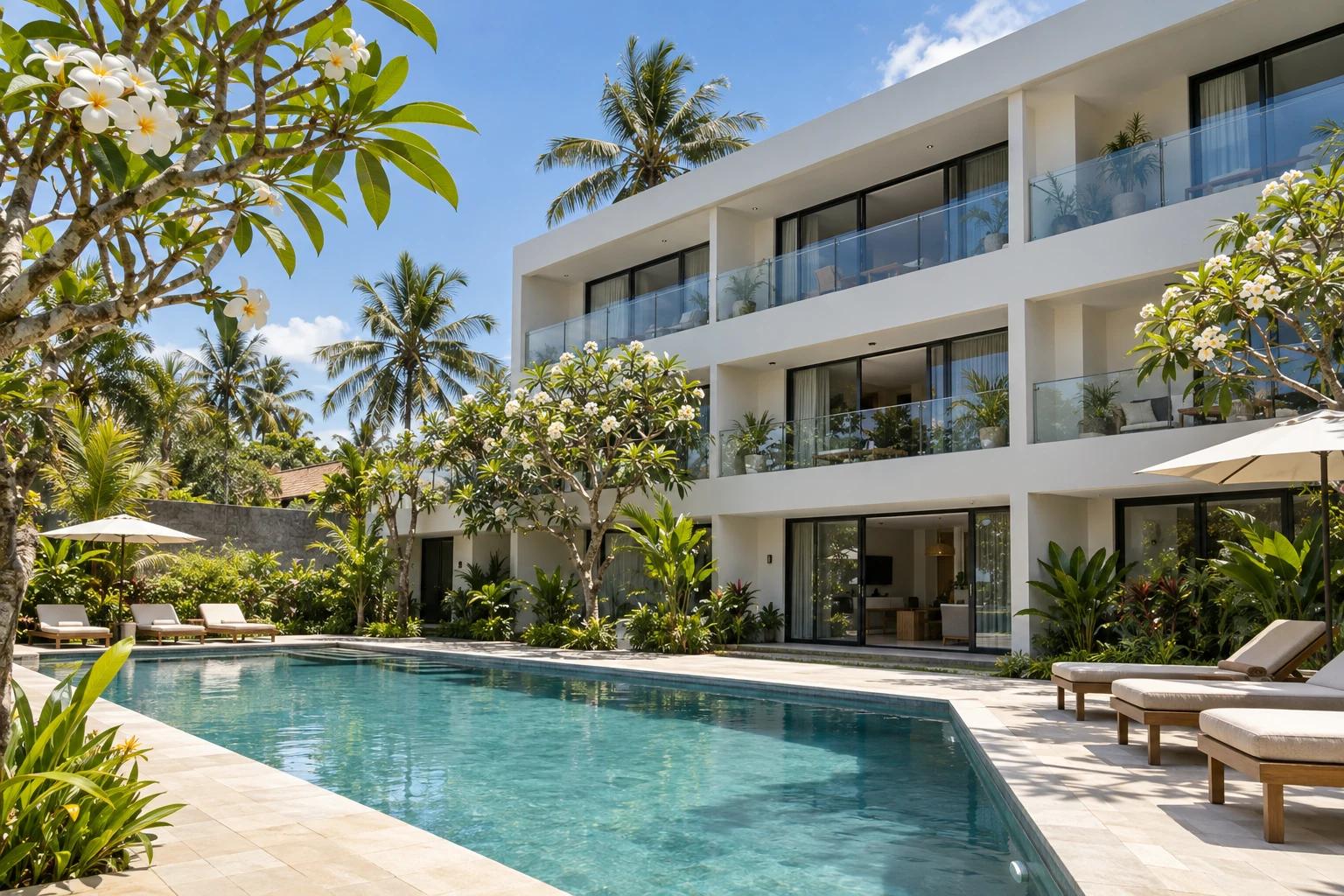
Book short-term accommodation (Airbnb, guesthouse, hotel) for 2 to 4 weeks first. Never sign a long lease from overseas without viewing in person: photos lie, the racket from roosters and construction sites doesn't carry online, and you can't see the damp in a north-facing bedroom from a listing either.
Your first 10 days on the ground
This is the pure logistics phase. Here's the order that works:
1. Local SIM card. Get Telkomsel (best coverage across the whole island); your passport is required. A 25 GB plan easily covers a month of normal use. XL Axiata is a cheaper alternative, but coverage is patchier once you leave the tourist zones.
2. Money. If you're staying under six months, you don't need an Indonesian bank account: a multi-currency Wise card plus ATM withdrawals will do. Stick to ATMs at the big local banks (BCA, BNI) — they're more reliable. Per-withdrawal caps and fees vary by bank and by card, and the banks don't publish them for foreign cards: check the amount and fees shown on screen before you confirm. For a long stay, open a BCA or Permata account (a KITAS makes this far smoother).
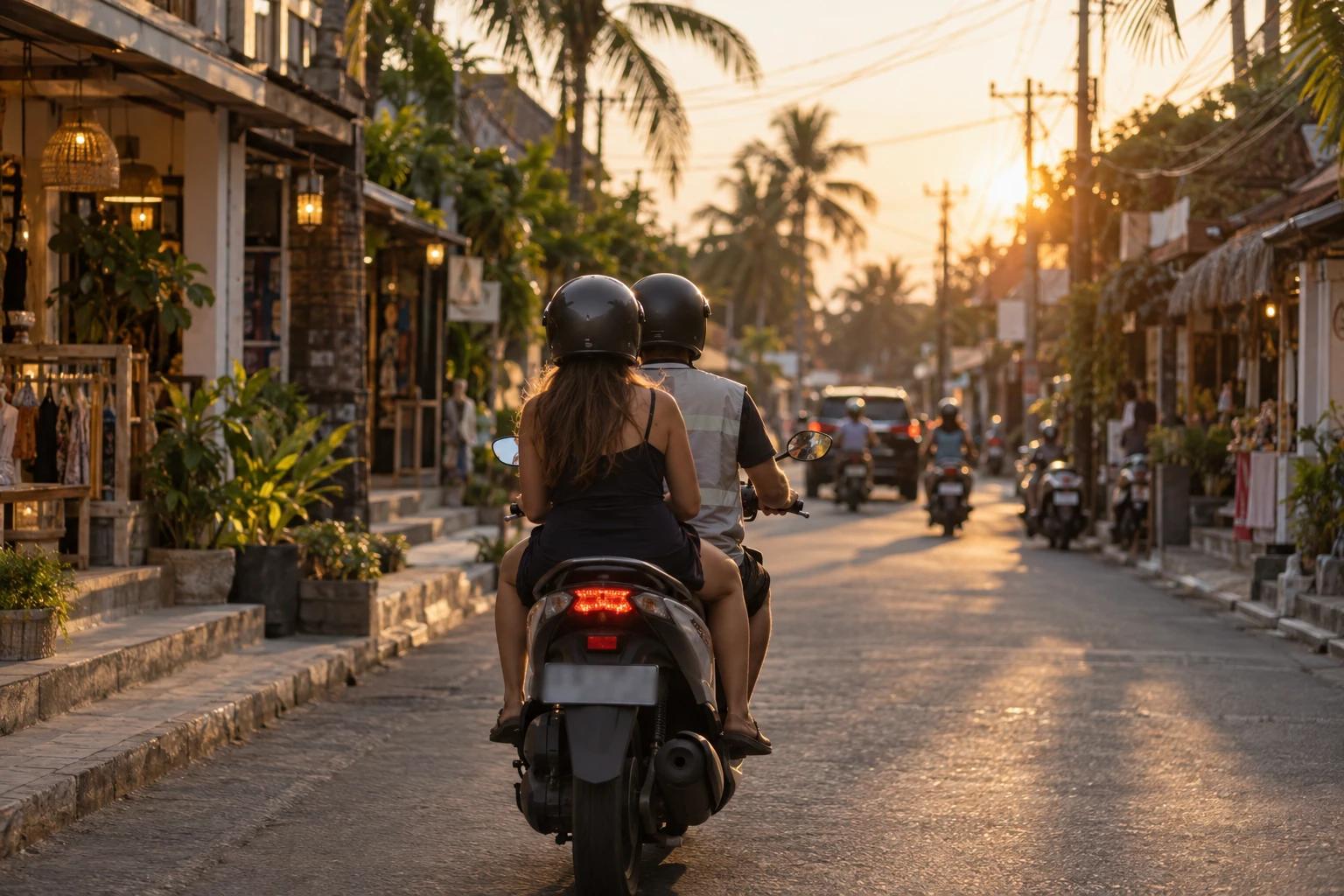
3. Scooter. RENT first, don't buy. Budget 1 to 1.5M IDR a month for a long-term rental, or 60,000 to 150,000 IDR a day short-term. On the legal side, there's no wiggle room in 2026: you need an International Driving Permit (IDP) with the category A stamp (two-wheelers) — the category B stamp (car) does not cover you — plus a helmet. The IDP is only valid as long as your home licence is.
4. Insurance and a go-to clinic. In your first week, scope out an international clinic in your neighbourhood and take out proper health insurance (more on this below). Don't wait for the accident.
The scooter trap: licence, helmet and papers
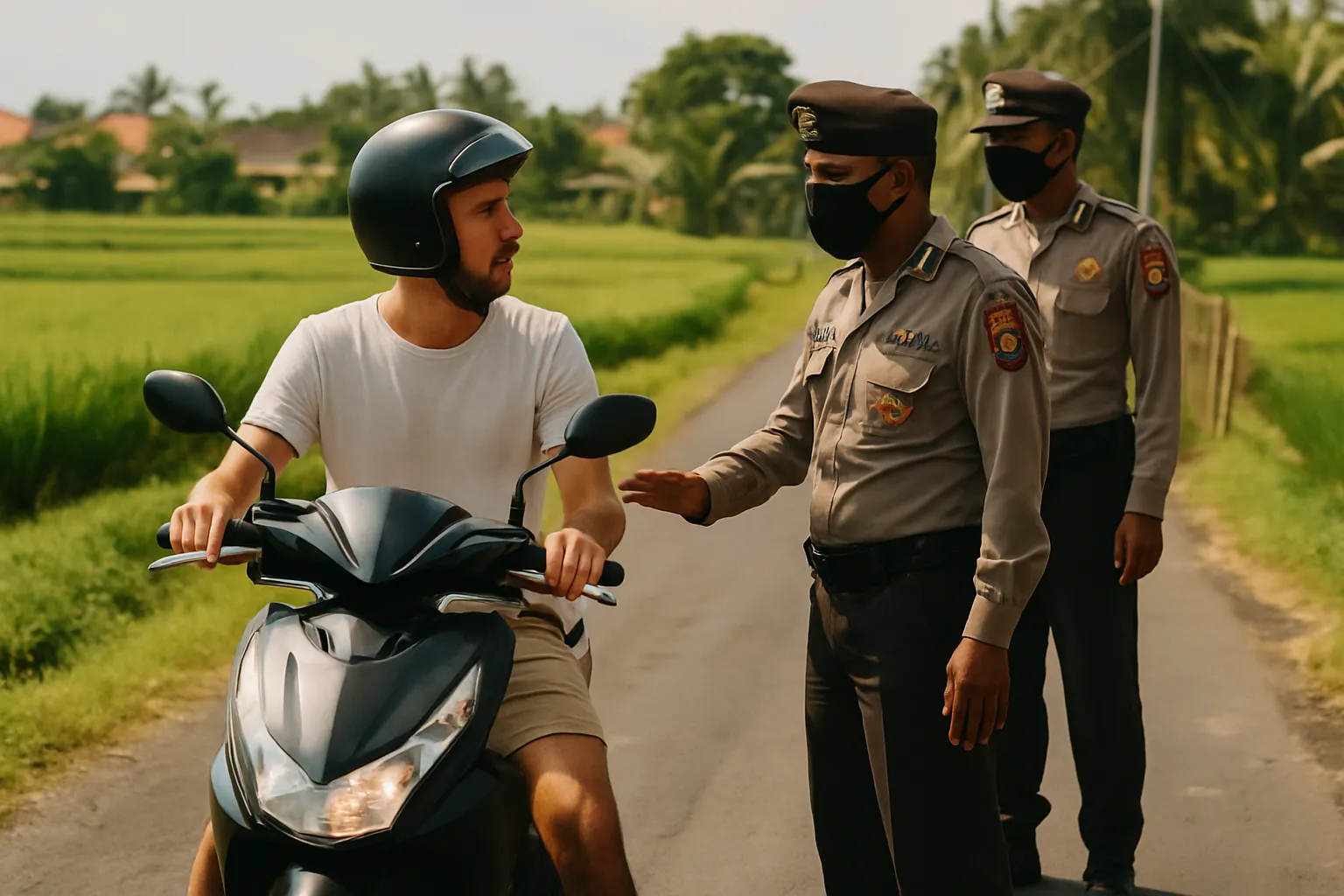
This is the part not to skimp on: at checkpoints, the police check your helmet, your licence and the scooter's papers. Riding without an IDP category A stamp exposes you to a fine (up to IDR 1,000,000 for riding without a licence, Law No. 22 of 2009, art. 281), to complications with your insurer if you crash, and to awkward situations on the roadside. The rule is simple: motorcycle licence + IDP category A stamp + helmet, or you don't ride. Plenty of expats buy their first second-hand scooter from each other once they're settled; on Lokalfinds you'll regularly find scooters passed on by residents heading home, often well-maintained and cheaper than the dealers.
Long-term accommodation: where and how much
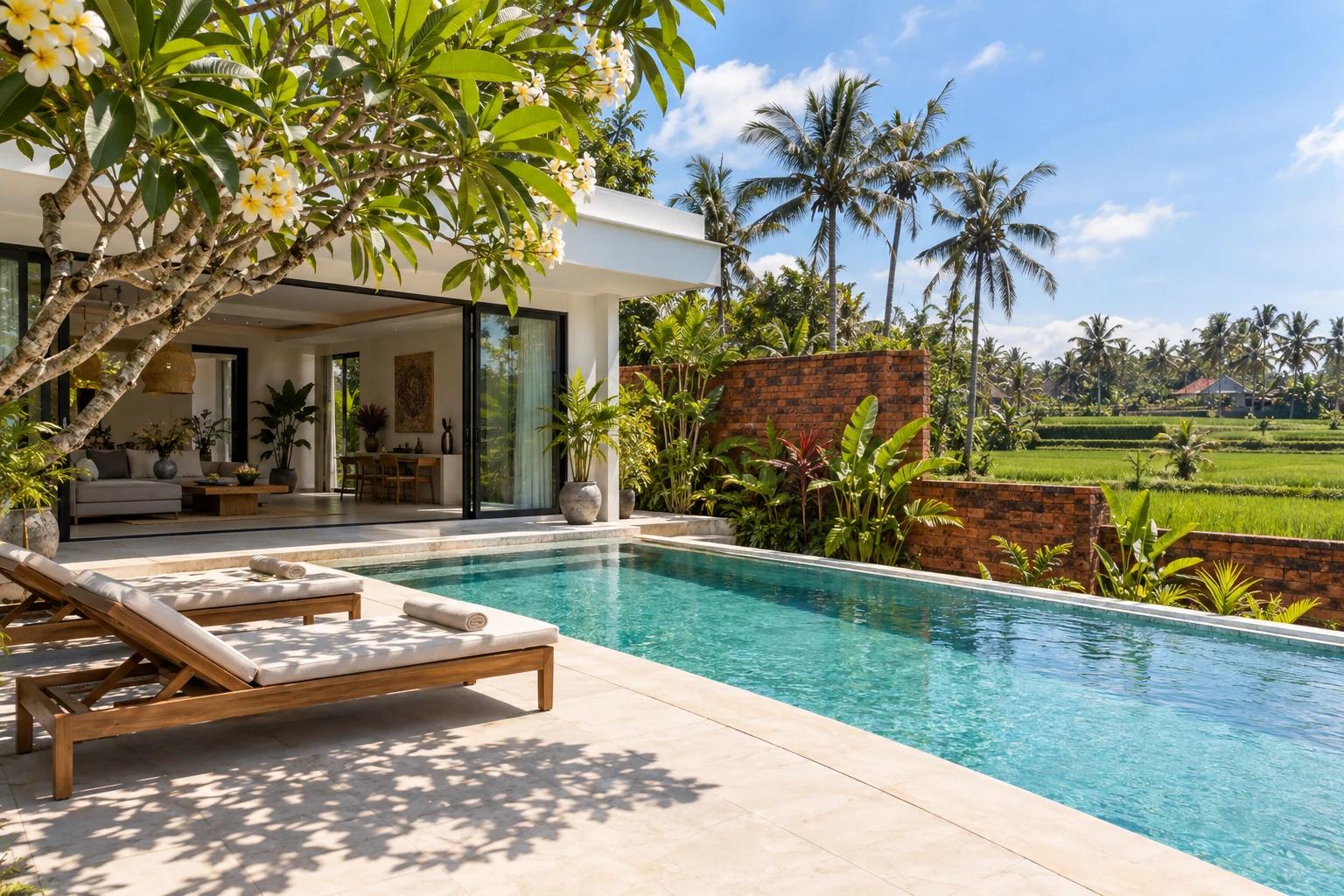
Villas are traditionally rented by the full year, paid upfront, sometimes negotiable down to six months. It's cultural, and it's your main bargaining lever: a yearly lease paid upfront works out 10 to 17% cheaper per month than renting month by month (the 25 to 55% discounts you sometimes see are calculated on the nightly rate). Never pay without a written contract and without checking the meters (water, electricity), plus the water quality and the pump pressure.
See also: Opening a bank account in Bali in 2026: which bank, which papers, how long?
Ballpark for a 1BR villa with a pool in Canggu: 13 to 50M IDR a month on a monthly basis, and by the year from about 150M IDR to some 370M IDR. For a 2BR, the range swings by micro-neighbourhood:
| Neighbourhood (Canggu) | 2BR rent / month (monthly rental) | Vibe |
|---|---|---|
| Berawa | 17-60M IDR | Lively, cafés, beach, traffic jams |
| Batu Bolong | 17-60M IDR | Heart of Canggu, surf, premium |
| Pererenan | 28-60M IDR | The "new Canggu", quieter, booming |
In Ubud, reckon on 30 to 40% less than Canggu for equivalent standards — jungle, rice fields, calm, but far from the beach.
Neighbourhoods to scout by profile:
- Canggu — young, surf, nomads, nightlife… and heavy traffic.
- Ubud — nature, yoga, calm, wellness community.
- Uluwatu / Bukit — clifftops, premium surf spots, more remote.
- Sanur — family-friendly, laid-back, calm beach, a more settled crowd.
- Pererenan — Canggu's natural extension, on the up.
To furnish a place without breaking the bank, the second-hand market among expats is buzzing: frequent departures mean near-new furniture going for a song. That's exactly what Lokalfinds pulls together for the Bali community — furniture, appliances, scooters, e-bikes — resident to resident, instead of paying import prices for new.
Health: don't gamble with this
Bali's healthcare runs at two speeds. The international hospitals — BIMC, Siloam, Kasih Ibu — offer quality care, English-speaking staff and direct billing with most international insurers, but they charge international rates. A consultation costs IDR 250,000 to 1.2 million depending on the hospital (from Kasih Ibu to BIMC), an ER visit IDR 300,000 to 5 million depending on what's done, and a night in a standard room IDR 800,000 to 5 million (Bali Zero comparison, February 2026).
See also: Rabies in Bali 2026: The Real Numbers and What to Do If You Are Bitten
The real financial risk is medical evacuation to Singapore if something serious goes wrong: we're talking tens of thousands of dollars (and into six figures for an air ambulance). Hence the golden rule: take out international health insurance with a repatriation component before you ever need a doctor, and call your insurer's 24/7 line before you turn up at the hospital so they can set up the payment guarantee (which saves you fronting a deposit).
Worth noting: if you get a KITAS and stay over six months, enrolment in Indonesia's national health scheme **BPJS Kesehatan** is mandatory for holders of a work stay permit — but it's a complement, not a substitute for proper international cover with repatriation. Before you leave, also check the official health guidance in the Indonesia entry requirements and health advice from the UK FCDO (recommended vaccines, up-to-date health risks).
On the day-to-day side: tap water is not drinkable (use bottled galon water), watch out for "Bali belly" in the first few weeks, and keep a basic medicine kit on hand.
Connectivity and work: coworkings and internet
For anyone working remotely, two questions matter: how good the connection is, and where you actually work.
Internet: in Canggu, the fibre in newer villas commonly delivers 50 to 100 Mbps, fine for video calls and uploads. But the rainy season (November to March) brings outages: keep a Telkomsel data plan as backup and, ideally, pick a place with a solid advertised fibre line.
See also: SIM Cards in Bali in 2026: Where to Buy, Which Plan, at What Price
Coworkings still alive in 2026 (heads up — the landscape has shifted a lot):
| Coworking | Area | Indicative rate |
|---|---|---|
| Setter | Canggu | Premium monthly membership |
| Outpost Ubud | Ubud | 149 USD/month (unlimited) |
| Tropical Nomad | Canggu | 120-180 USD/month |
| Genius Cafe | Sanur | IDR 1.75M/month |
Several long-standing spots have closed: don't waste time hunting for Outpost Canggu, Hubud (Ubud) or Dojo Bali — they're gone. Always confirm a coworking is still open before you plan your week around it.

What we wish we'd known
- The rainy season changes everything. Roads flood in ten minutes, the internet drops, and damp creeps into the cupboards. Have a backup for your connection and steer clear of signing a poorly insulated villa.
- Learn 20 words of Bahasa in your first week.
Terima kasih(thank you),berapa?(how much?),tidak(no)… It transforms every interaction, and often the price. - Enrol with your home country's consular service. US citizens can sign up free for the Smart Traveler Enrollment Program (STEP) so the U.S. Embassy & Consulates in Indonesia can reach you in an emergency; nationals of other countries have an equivalent registration — it's free, online, and pays off the day something goes wrong.
- Join the expat Facebook/Telegram groups for your neighbourhood. That's where the good leads on housing, scooters and furniture circulate, along with the useful alerts.
- Keep cash on you. Plenty of warungs and landlords take nothing but notes.
- Patience. Settling in takes 2 to 3 months before you feel genuinely at ease. Don't skip steps: visa first, short-term accommodation, then everything else.
Official sources
Stay and health procedures change regularly. Always check the information at the source before acting:
- Indonesian Directorate General of Immigration (imigrasi.go.id) — visas, KITAS and stay permits.
- BPJS Kesehatan — Indonesia's national health insurance (mandatory for holders of a work KITAS).
- U.S. Embassy & Consulates in Indonesia — consular services, including a U.S. Consular Agency in Bali, and STEP enrolment.
- Indonesia travel advice — UK FCDO — safety, entry requirements and health, updated continuously.
- Official pages for each visa code (imigrasi.go.id) — C1 with no sponsor (with exceptions); E28A: at least IDR 10 billion in shares; E33 (Second Home): deposit of at least USD 130,000; consulted 24 October 2026.
- Immigration press release of 28 May 2025 — photo and interview at the immigration office for every extension since 29 May 2025.
- BKPM Regulation No. 5 of 2025 — art. 26: paid-up capital of at least IDR 2.5 billion per PT PMA; consulted 24 October 2026.
- Law No. 22 of 2009 on road traffic — art. 77 (licence required) and 281 (fine of up to IDR 1,000,000 without a licence); Police Regulation No. 5 of 2021 on the SIM — art. 3 (international driving permit) and 9 (SIM for foreigners); consulted 24 October 2026.
- Visa Indonesia — rents by area in 2026 (published 28 April 2026), Wonderful Bali Villas — monthly rents for villas with a pool and the 10-17% yearly discount (August 2026) and Bali Home Immo — villas for yearly rent in Canggu — non-official sources (media and agencies): asking rents, consulted 24 October 2026.
- Bali Zero — Bali hospitals compared (non-official source, published 17 February 2026, consulted 24 October 2026) — consultation, ER and room rates by hospital.
- Outpost — coworking in Ubud and Genius Cafe — membership plans (operators' websites) — rates consulted 24 October 2026.
- European Central Bank — euro reference rate against the rupiah — rate of 23 October 2026 (EUR 1 = IDR 20,268.06) used for the conversions.
Frequently asked questions
Which visa should I choose to move to Bali in 2026?
For a first stay, the C1 visa (the old B211A, renamed on 9 January 2024) is the simplest: 60 days, extendable twice up to 180 days, with a mandatory in-person visit to the immigration office at every extension. Budget roughly IDR 2 to 2.5 million (about EUR 99 to 123) through an agency. To stay longer or to work/invest, look at an investor KITAS (PT PMA), a spouse KITAS or the Second Home Visa (a deposit of at least USD 130,000).
What monthly budget should I plan for living in Bali?
For a solo expat living comfortably in Canggu or Seminyak, reckon on 1,300 to 2,850 USD a month, rent included. In Ubud you can cut that by 30 to 40%. The most variable line is housing: a 1BR villa with a pool in Canggu runs 13 to 50M IDR a month on a monthly basis, and a yearly lease paid upfront works out 10 to 17% cheaper per month.
Do I need a special licence to ride a scooter in Bali?
Yes. You need an International Driving Permit (IDP) with the category A stamp (two-wheelers), valid as long as your home licence is, plus a helmet. The category B stamp (car) doesn't cover you. Riding without a valid licence can cost you a fine of up to IDR 1,000,000. A KITAS, for its part, is a stay permit, not a driving licence: it replaces neither an Indonesian SIM nor your national licence with its IDP.
Do I need an Indonesian bank account?
Not if you're staying under six months: a multi-currency Wise card and ATM withdrawals at the big local banks (BCA, BNI) will do. Beyond that, or if you want to pay rent and bills locally, open a BCA or Permata account — it's far simpler once your KITAS is in hand.
What health insurance should I get for Bali?
International health insurance with a repatriation/evacuation component, taken out before you arrive. The international hospitals (BIMC, Siloam, Kasih Ibu) charge international rates, and a medical evacuation to Singapore can run into tens of thousands of dollars. Go with an insurer that offers direct billing with these hospitals, and call its 24/7 line before heading to the ER.
Where do I find affordable housing, a scooter and furniture?
For long-term housing, go through the local expat Facebook/Telegram groups and always view before you sign. For second-hand scooters and furnishings, the expat-to-expat market is very active thanks to frequent departures: community platforms like Lokalfinds gather these listings (furniture, appliances, scooters) among Bali residents, often far cheaper than buying new.
How long does it really take to settle in?
Reckon on 2 to 3 months to feel at ease: finding the right neighbourhood, the right long-term place, getting the hang of local driving, building a network. The first few weeks are logistics (visa, SIM, scooter, bank, health); the rest comes with time. Don't rush into a long lease until you've tried out a few neighbourhoods.