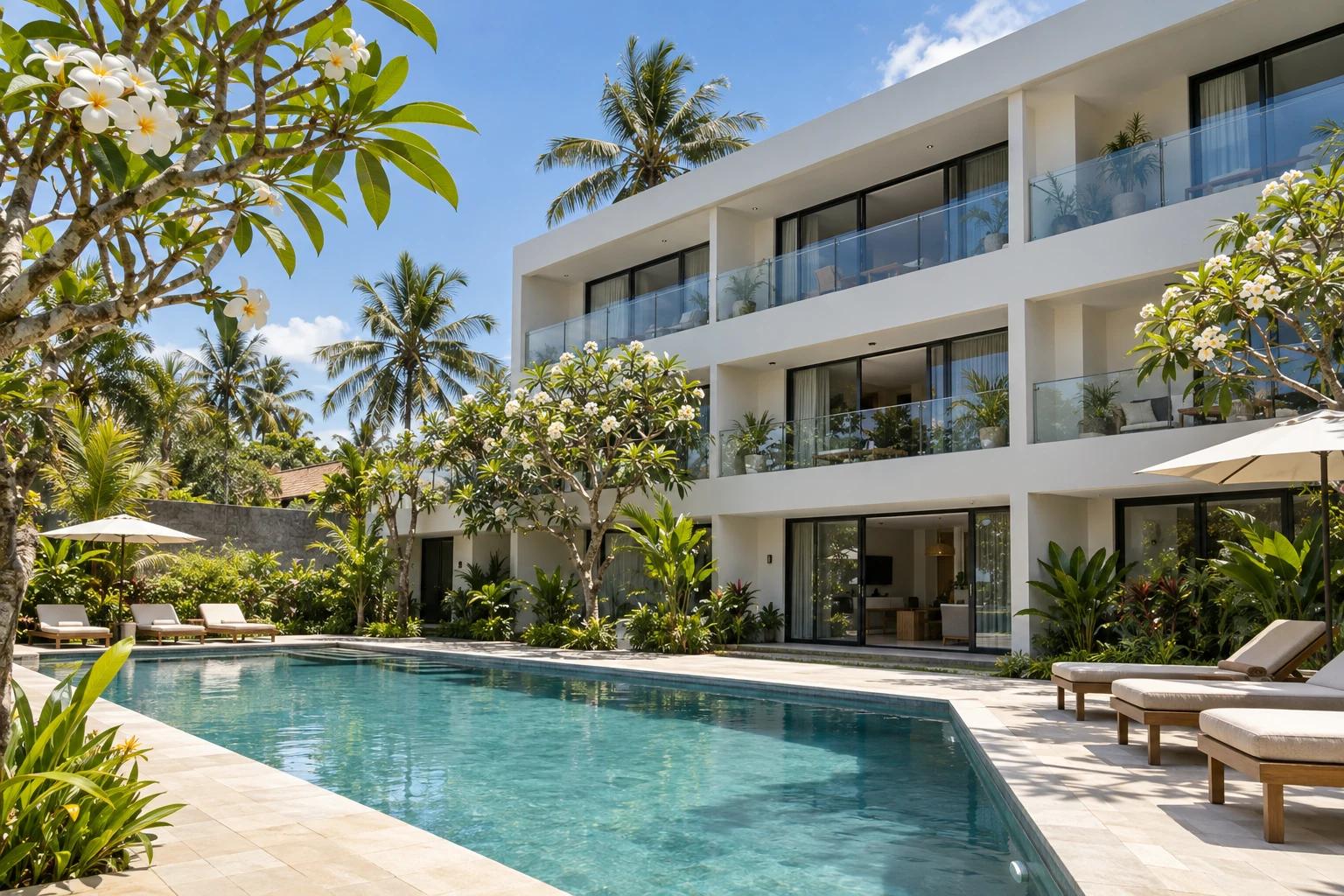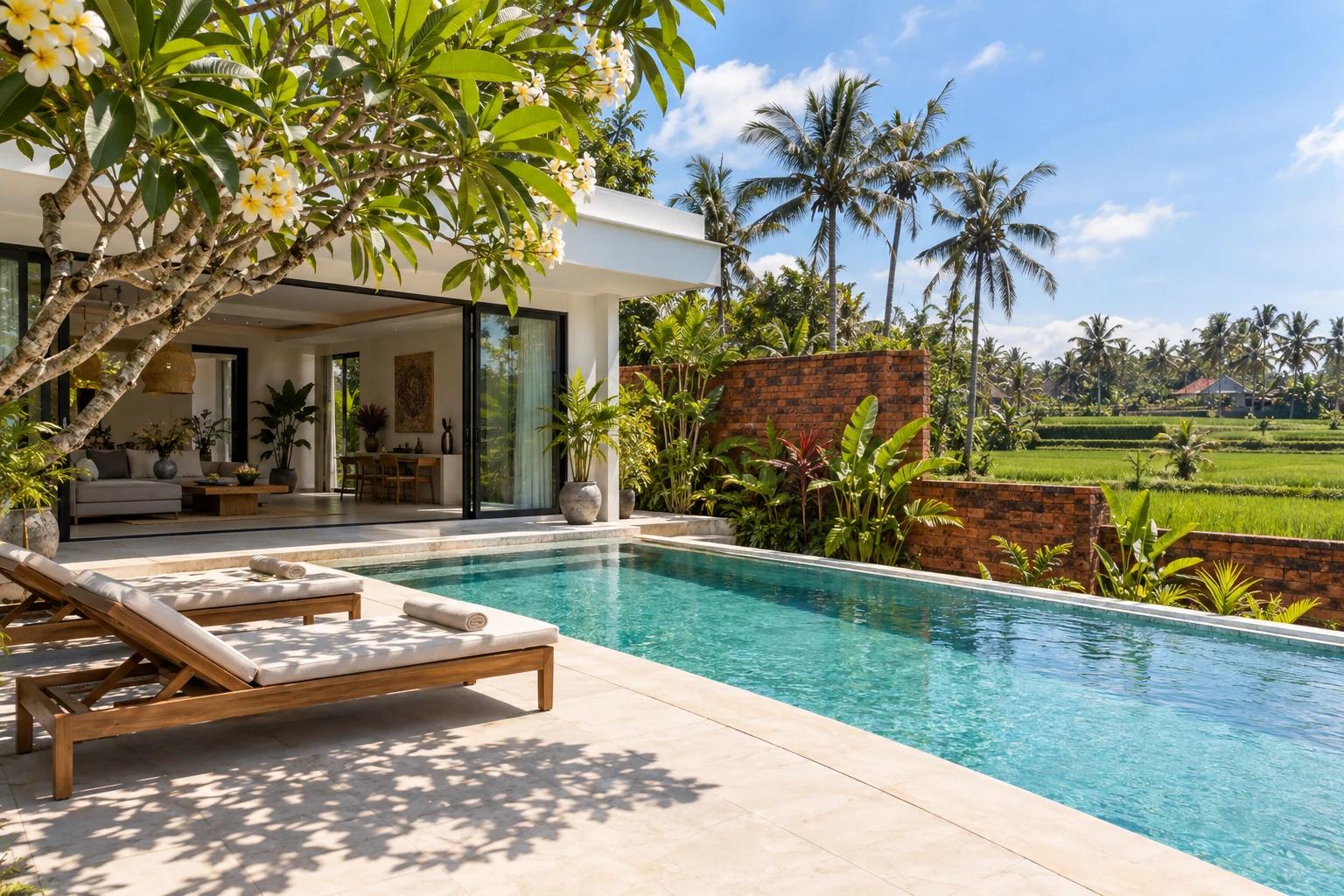
Living in Bali in 2026 means pairing a cost of living three to five times lower than Europe with a mature remote-work setup (50-100 Mbps fibre, buzzing coworking spaces) and year-round tropical weather. Budget 1,300 to 2,850 USD a month for a comfortable solo life, plan on a C1 Visa (formerly the B211A) for up to 180 days, and line up international health insurance once you pass the six-month mark.
The 30-second version
Bali is still the remote-work capital of the world in 2026. Cost of living runs 700-6,000 EUR depending on your profile, the C1 Visa (ex-B211A) is the easiest route in (60 days + 2 extensions = 180 days, with an in-person visit required for each extension), Canggu is for surfers, Ubud for the quiet life, and Sanur for families. Fibre internet hits 50-100 Mbps in Canggu, and a used scooter runs 8-22 M IDR (an IDP with the "A" stamp is non-negotiable). International health insurance is essential past six months. Never overstay (1 M IDR per day). Dry season is April-October, rainy season November-March. More than 10,000 foreigners held a KITAS or KITAP in 2025, according to Bali immigration. To buy and sell your stuff among fellow expats: Lokalfinds (the classifieds site built for it).
Why Bali is still THE expat destination in 2026
Bali pulls together three things that rarely come as a package: an affordable cost of living (three to five times cheaper than Western Europe for an equivalent standard of living), a mature remote-work infrastructure (active coworking spaces, fibre rolled out across the south, a stable power grid), and tropical quality of life (26-32 degrees C all year, the ocean less than 15 minutes away from the coastal neighbourhoods, and a tight-knit international community).
According to provisional figures from the regional immigration office, reported in February 2026, more than 10,000 foreigners held a stay permit in Bali (KITAS or KITAP) in 2025, twice as many as in 2024; on top of that come the foreigners who arrive on a visit visa.
See also: Opening a bank account in Bali in 2026: which bank, which papers, how long?
What it actually costs to live in Bali in 2026
Average monthly budget by profile (real 2026 numbers):
| Profile | Budget | Housing | Food | Getting around |
|---|---|---|---|---|
| Budget backpacker | 700-1,000 EUR | 3-5 M IDR | 4-6 M IDR | 800 K IDR |
| Standard digital nomad | 1,500-2,500 EUR | 8-15 M IDR | 6-9 M IDR | 1-2 M IDR |
| Comfortable couple | 2,500-4,000 EUR | 15-25 M IDR | 10-14 M IDR | 2-3 M IDR |
| Expat family | 3,500-6,000 EUR | 25-45 M IDR | 14-18 M IDR | 4-6 M IDR |
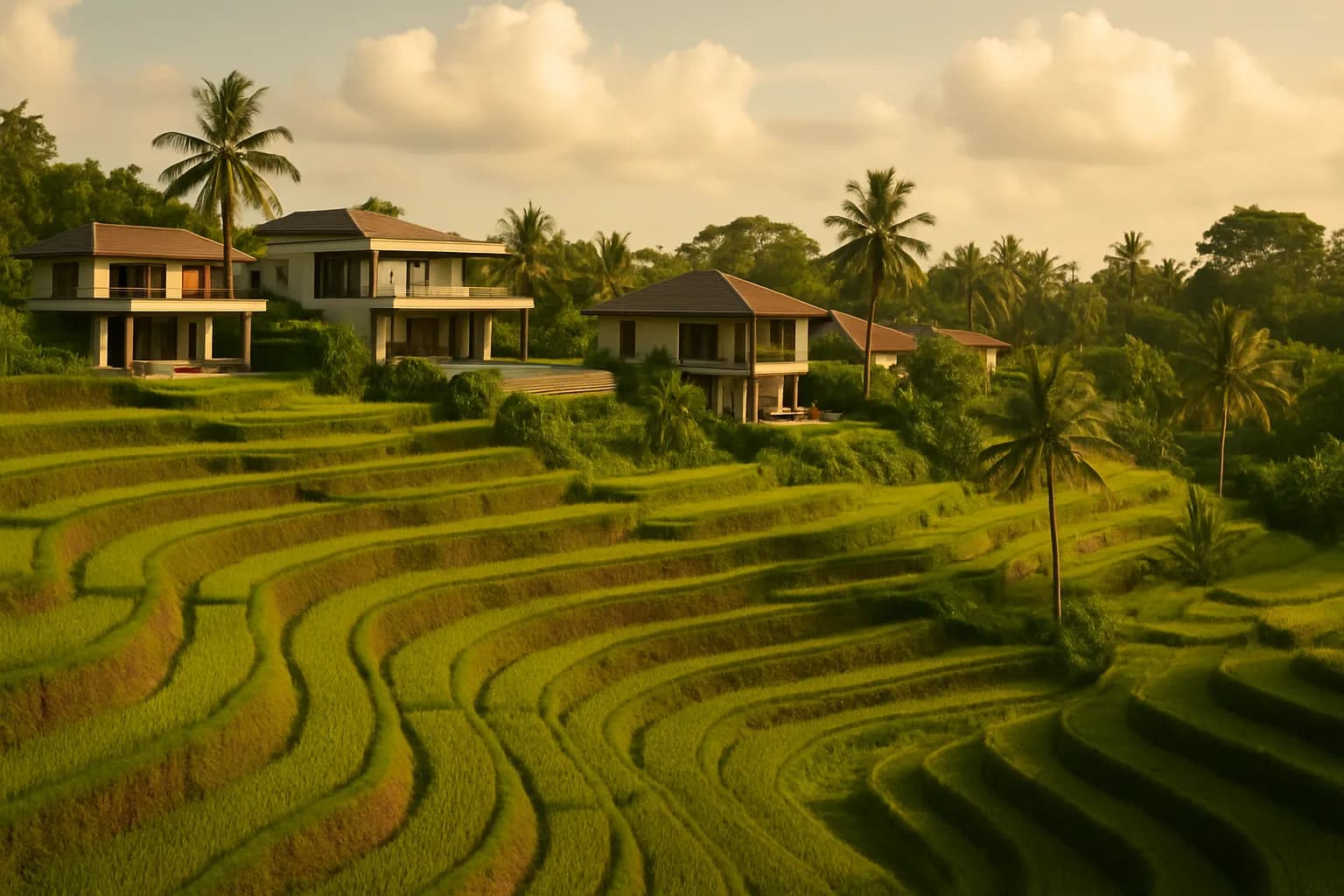
For a comfortable solo lifestyle, budget 1,300 to 2,850 USD a month, all in. A one-bedroom villa with a pool in Canggu rents for 13-50 M IDR a month on a monthly basis (a yearly lease paid upfront works out 10 to 17% cheaper per month); in Ubud, the same setup drops by 30 to 40%. Villa rents have jumped 20 to 40% since the pandemic, according to Knowmads Bali. Local food (warungs) holds steady at 25-50 K IDR a meal, while imported European products cost three to five times their home-country price. The rupiah amounts above convert at the day's exchange rate: the official USD/IDR reference rate (JISDOR) is published by Bank Indonesia.
-> Full breakdown by category: The cost of living in Bali in 2026: a detailed guide by profile
Which visa do you need to live in Bali?
The C1 Visa (formerly the B211A) is the go-to visa in 2026. It's valid for 60 days and can be extended twice, 60 days each time, for up to 180 days of continuous stay (the same ceiling as the old B211A, whose official name became "C1 Visa" on 9 January 2024). The upfront cost through a local agent is roughly IDR 2-2.5 M, or about 99-123 EUR at the ECB rate of 23 October 2026 (this visa needs no sponsor), plus another hundred euros or so per extension.
See also: Overstaying in Bali in 2026: 1,000,000 IDR a day, and what happens after 60 days?
Heads-up: an in-person visit is mandatory at every extension since 29 May 2025: a photo and an interview at the immigration office. Plan for one in-person visit to the office that covers your address (Denpasar's covers Denpasar, Ubud and northern Badung, but not Kuta, Seminyak or Canggu). Your agent will walk you through it, but you have to show up yourself. Visa categories and their conditions are published by the Directorate General of Immigration (Imigrasi), and entry/stay requirements for foreign nationals are laid out in the UK government's Foreign travel advice: Indonesia - Entry requirements. US citizens can also check visa and consular details with the U.S. Embassy in Jakarta.
Alternatives depending on your situation:
- Investor KITAS (valid 1 or 2 years) if you set up a PT PMA
- Spouse KITAS if you're married to an Indonesian national
- Second Home Visa (5-10 years, with a locked deposit) for higher-net-worth profiles
- Student Visa if you're enrolled in an accredited program
Heads-up: never overstay your visa. Overstaying costs 1 M IDR per day and risks a ban from the country.
-> Step-by-step process: The C1 Visa (ex-B211A) in 2026: the complete guide
Which Bali neighbourhood should you settle in?
The top 5 expat areas in 2026:
1. Canggu (Batu Bolong, Berawa, Pererenan) — young, surf, traffic jams, coworking cafes on every corner. Villa rent runs 13-50 M IDR a month on a monthly basis for a one-bed with a pool.
2. Ubud — jungle, yoga, calm, but 30-45 minutes from the beach. Rent is 30-40% cheaper than Canggu.
3. Uluwatu (Bingin, Padang Padang, Pecatu) — clifftops, serious surf, premium. Rent runs 15-40 M IDR a month.
4. Sanur — family-friendly, quiet, more grown-up, with a mellow beach. Rent runs 10-20 M IDR a month.
5. Pererenan / Nyanyi — the "new Canggu," greener, with wilder beaches. Growing fast.
-> A closer look at Canggu's micro-neighbourhoods: The 8 micro-neighbourhoods of Canggu
Finding a place to live in Bali — the real picture
Villas are typically rented by the full year, paid upfront (six months is sometimes negotiable): a yearly lease paid upfront works out 10 to 17% cheaper per month than renting month by month. Expect 8-15 M IDR a month for a studio or one-bedroom, 15-30 M IDR a month for a two-bed villa, and 25-50 M IDR a month for a 3+ bedroom villa with a pool.
Golden rules for 2026:
- NEVER sign a long-term lease without viewing the place in person. Photos lie.
- Check the meters (water/electricity) BEFORE you sign — overbilling is common.
- Internet: insist on a stable 50 Mbps minimum. Run a speed test on the spot.
- Rainy season: check the roof for leaks, plus ventilation and mosquito screens.
- A written contract is a must (Bahasa Indonesia plus an English translation).
Internet, coworking and remote work
Bali offers a mature remote-work setup in 2026:
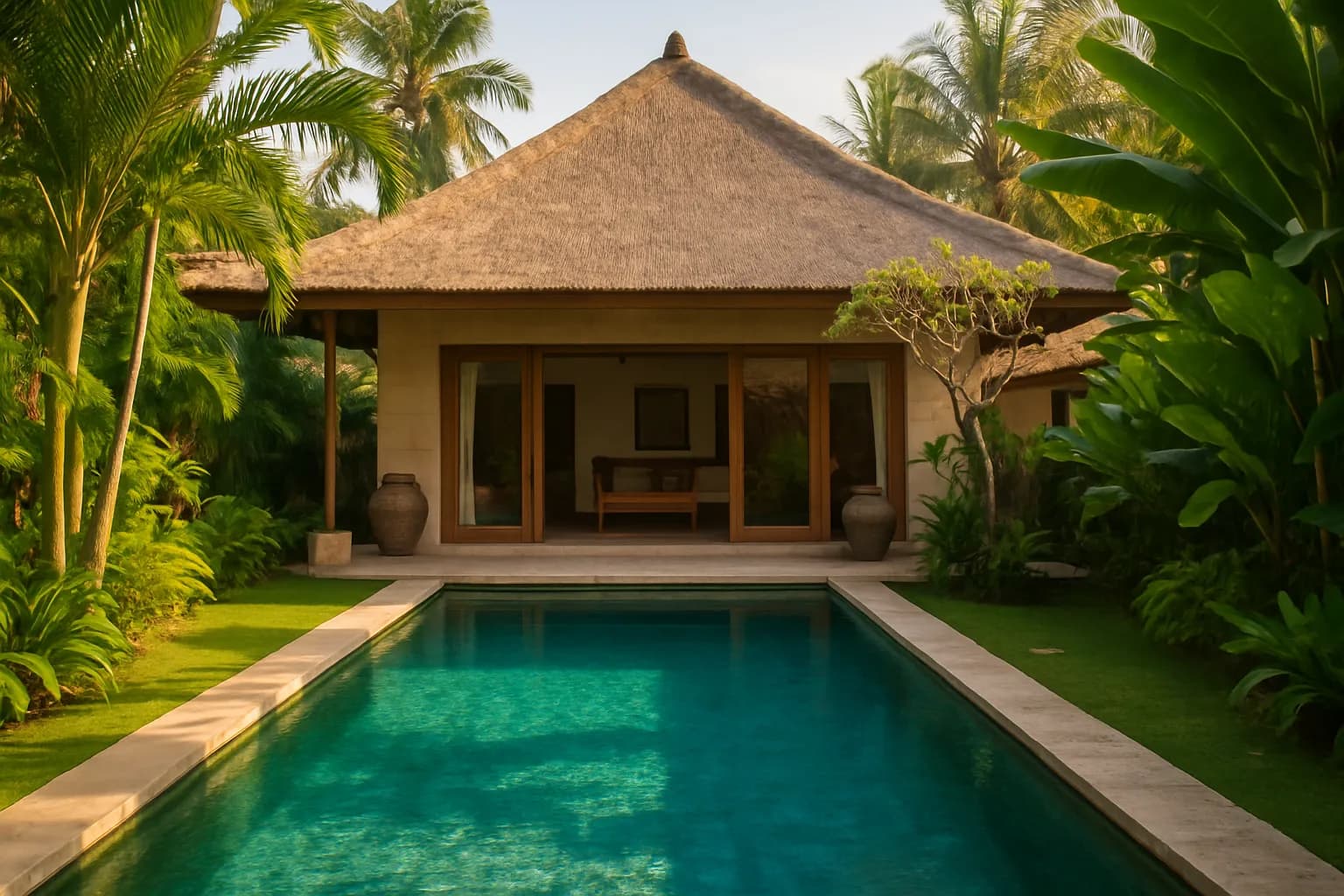
- Fibre optic is available across the south. In Canggu, expect a stable 50-100 Mbps (from 230-250 K IDR a month on IndiHome's and Biznet's price lists). Always test the speed before signing.
- 4G/5G: Telkomsel has the best coverage on the island. A prepaid SIM with 25 GB runs about 150-180 K IDR a month, and it's the ideal backup during rainy season.
- Active coworking spaces (day pass around 250-300 K IDR, monthly memberships vary):
- Setter (Berawa/Canggu, plus a space in Ubud) — open 24/7, day pass IDR 299,000, monthly IDR 3,990,000, an entrepreneur/startup crowd
- Outpost Ubud — 149 USD a month unlimited, 210 USD with a dedicated desk, with access to events and meeting rooms
- Tropical Nomad (Canggu) — 120-180 USD a month, a reliable nomad staple
- Genius Cafe (Sanur) — a beachfront coworking cafe with a calmer vibe
- Coworking cafes: Crate (Canggu) and Suka Espresso (Uluwatu) for shorter sessions.
-> 2026 picks: The 12 best coworking cafes in Bali
Healthcare and insurance in Bali
Recommended international clinics:
- BIMC, Bali International Medical Centre (Kuta + Nusa Dua) — the expat go-to
- Siloam Hospital (Denpasar) — full-service
- Kasih Ibu (Denpasar) — affordable
A GP visit geared to expats runs 400-800 K IDR. Decent dental work: 1-3 M IDR. A day in hospital: from 3 M IDR.
International health insurance is STRONGLY recommended once you're staying longer than six months. Budget 1,500-3,500 EUR a year for solid cover (Cigna, April International, Allianz Care). Without it, a medical evacuation from Bali to Singapore runs upwards of 50,000 USD. For up-to-date health risks (dengue, rabies in Bali, recommended vaccines), see the UK government's Foreign travel advice: Indonesia - Health. One tip from the ground: make sure your policy explicitly covers riding a scooter — plenty of insurers exclude it or require a valid motorbike licence (IDP with the "A" stamp) before they'll pay out on a two-wheeler accident.
Eating in Bali — the reality
Three price tiers coexist:
- Local warung (Indonesian food): 25-50 K IDR a meal (nasi campur, mie goreng, satay)
- Expat cafe/restaurant (international): 100-200 K IDR a meal
- Fine dining / beach club: 300-800 K IDR per person
Fresh markets are everywhere (Pasar Badung in Denpasar, Pasar Ubud, the Saturday organic market in Canggu). Imported Western goods (cheese, wine, gluten-free) run three to five times the European price.
Getting around in Bali
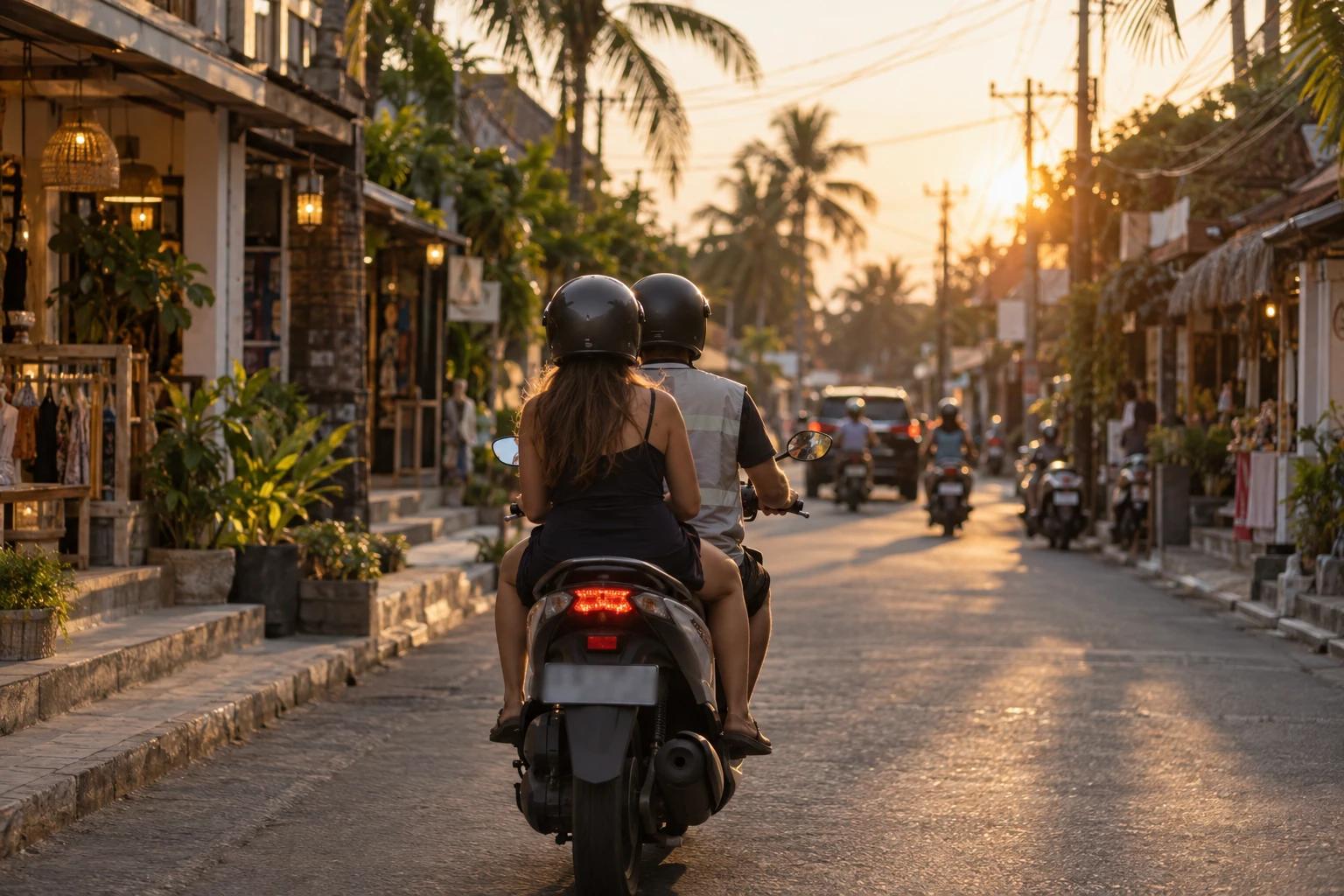
The scooter is still the number-one option for 95% of expats. Figure 1-2 M IDR a month to rent, or 8-22 M IDR to buy used.
Heads-up: the IDP (International Driving Permit) with the "A" stamp — the motorcycle category — is mandatory in 2026. This is not up for debate: the police regularly check helmets, licences and the scooter's papers. Riding without an IDP "A" stamp means a fine of up to 1 M IDR (Law No. 22 of 2009, art. 281), void insurance if you crash, and a real risk of serious hassle.
Alternatives:
- Car: 4-6 M IDR a month to rent, 150-300 M IDR to buy. Handy with a family, but a slog on the Canggu-Seminyak corridor at rush hour.
- Grab/Gojek: on-demand car or scooter, around 30 K IDR for a short ride.
- E-bike: an emerging option, great for short hops in quieter areas.
-> Before you buy: Buying a used scooter in Bali: every trap to avoid
Safety in Bali in 2026
Bali remains one of the safest islands in Southeast Asia. Violent crime is rare. The real risks:
- Snatch-and-grab thefts from scooters (phone, bag) — low, but they do happen on the Canggu/Seminyak main roads at night
- Villa break-ins when you're away for long stretches — a safe is a good idea
- Scooter scams (inflated deposits, made-up scratches) — rent from well-known operators and photograph the scooter at pickup
- Tap water isn't drinkable — filtered or bottled only
Police roadblocks are common: have your IDP "A" stamp, a helmet, and the scooter's paperwork (STNK) in order, and you'll have nothing to worry about.
Making friends and finding your community
Bali has one of the most active expat communities in the world, and that's one of the island's biggest assets in your first year. The ways in:
- Neighbourhood Facebook & WhatsApp groups (Canggu Community 50k+ members, Ubud Community 30k+) — classifieds, housing, recommendations, events
- Meetup.com — themed events (language, business, sports, photography)
- InterNations — a more formal expat network, with networking evenings
- The coworking spaces (Setter, Outpost Ubud, Tropical Nomad) — where most friendships and professional collaborations get started
- Group classes — yoga, surf, padel, Balinese dance: the most reliable way to build a steady circle
- **Lokalfinds** — to buy and sell your stuff among Bali expats, and bump into neighbours along the way (our classifieds site)
The social pace is intense for the first few months, then it settles down — that's normal. After about six months, everyone has found their four or five people they trust and their own rhythm. A tip: mix your circles (passing digital nomads AND long-term residents) so you're not rebuilding from scratch every time a wave of people leaves.

Climate & seasons
Bali has two seasons:
- Dry season (April-October) — peaking in July-August, sunny days, humidity around 70%, pleasant evenings at 24-26 degrees C
- Rainy season (November-March) — peaking in January-February, heavy but brief downpours, humidity 85%+, occasional local flooding
Getting ready for rainy season: a backup internet connection (a 25 GB Telkomsel SIM on standby), a generator for demanding digital nomads, a dehumidifier in the villa (otherwise, mould), and quick-drying clothes.
Mistakes to avoid in your first year
Beyond the purely administrative traps, here's what trips up newcomers most often:
1. Paying everything in cash with no written contract. A rent, a scooter deposit, a security deposit: always demand a receipt and a contract (Bahasa Indonesia plus English). With no paper trail, you have no recourse.
2. Overpaying on housing in your first week. Lots of people panic-sign on arrival, at tourist prices. Stay somewhere on a monthly basis for 2-3 weeks while you get a feel for the neighbourhoods, then negotiate a long lease (around 10 to 17% less per month).
3. Riding without an IDP "A" stamp. It's one of the costliest mistakes you can make: a fine, void insurance, and a world of trouble if you crash.
4. Skipping health insurance "to save money." A single scooter spill or a badly treated bout of dengue can wipe out years of savings. International cover from month six, full stop.
5. Working visibly for a local business on a C1 Visa. Remote work for a foreign employer is a tolerated grey zone; a visible local job is not.
6. Buying new what you can find used. Scooters, furniture, appliances, surfboards: the community is constantly reselling on Lokalfinds at 40-60% off retail. No need to buy everything in a shop.
7. Brushing off the local culture. Learning 20 words of Bahasa Indonesia and respecting the offerings (canang sari) and ceremonies changes every interaction and opens doors.
Official sources
The YMYL information in this guide (visa, health, currency) draws on tier-1 official sources, which you should re-check before taking any steps, since the rules change quickly:
- Directorate General of Immigration (Imigrasi) — visa categories, extensions, biometrics.
- Foreign travel advice: Indonesia - Entry requirements (GOV.UK) — entry conditions, visas, formalities.
- Foreign travel advice: Indonesia - Health (GOV.UK) — health risks, vaccines, medical cover.
- U.S. Embassy in Jakarta - Visas — visa and consular information for US citizens.
- Bank Indonesia — the official USD/IDR reference exchange rate (JISDOR).
- Official pages for each visa code (imigrasi.go.id) — C1 with no sponsor (with exceptions), E28A investor KITAS for one or two years; consulted 24 October 2026.
- Immigration press release of 28 May 2025 — photo and interview at the immigration office for every extension since 29 May 2025.
- ANTARA, 30 June 2025 (state news agency) — the area covered by the Denpasar immigration office: Denpasar, northern Badung, Gianyar, Klungkung, Bangli and Tabanan.
- BaleBengong, 17 February 2026 (media, provisional figures from Bali's regional immigration office) — KITAS and KITAP holders in Bali in 2025.
- Law No. 22 of 2009 on road traffic — art. 281: fine of up to IDR 1,000,000 for riding without a licence; consulted 24 October 2026.
- Visa Indonesia — rents by area in 2026 (published 28 April 2026), Wonderful Bali Villas — monthly rents and the 10-17% yearly discount (August 2026) and Knowmads Bali — the 20-40% post-pandemic rent rise — non-official sources (media and agencies), consulted 24 October 2026.
- Telkomsel — IndiHome rates (50 Mbps from IDR 230,000) and Biznet Home — 2026 rates (100 Mbps at IDR 250,000, Jakarta price list) — operators' websites, consulted 24 October 2026.
- Setter and Outpost — coworking in Ubud (operators' websites) — rates consulted 24 October 2026.
- European Central Bank — euro reference rate against the rupiah — rate of 23 October 2026 (EUR 1 = IDR 20,268.06) used for the conversions.
Frequently asked questions
What's the best visa to live in Bali in 2026?
The C1 Visa (formerly the B211A, renamed on 9 January 2024) for a first stay of 180 days (60 days initially + 2 extensions of 60 days each, with an in-person visit mandatory at every extension). Upfront cost around IDR 2-2.5 M (about 99-123 EUR). There's no third extension: you have to leave the country and reapply. To settle in for the long haul, look at an investor KITAS (1 or 2 years, via a PT PMA) or the Second Home Visa (5-10 years, with a locked deposit).
How much does a month in Bali cost?
700-1,000 EUR on a tight budget, 1,300-2,850 USD for a comfortable solo life, 2,500-4,000 EUR for a comfortable couple, and 3,500-6,000 EUR for a family with international school fees. The range widens with the standard of your villa and how often you eat at expat restaurants.
Do you need a licence to ride a scooter in Bali?
Yes, and it's non-negotiable in 2026: the IDP (International Driving Permit) with the "A" stamp (the motorcycle category) is mandatory, on top of your home-country motorbike licence. Without a valid licence, the fine can reach 1 M IDR (Law No. 22 of 2009, art. 281), and your insurance is void without a valid IDP.
What kind of internet can you expect in Bali?
A stable 50-100 Mbps of fibre in Canggu (from 230-250 K IDR a month), plus excellent Telkomsel 4G/5G. Always keep a 25 GB Telkomsel SIM (around 150-180 K IDR) as a backup for rainy season, when the fibre can drop out.
Can you work in Bali on a C1 Visa?
Officially, working on the ground is not allowed. Remote work for a foreign employer or foreign clients is a tolerated grey zone, but legally murky. The golden rule: never be seen working for a local Indonesian business.
What health insurance should you arrange?
International health insurance is strongly recommended past six months (Cigna, April International, Allianz Care, around 1,500-3,500 EUR a year). Make sure it covers riding a scooter. Without insurance, a medical evacuation to Singapore tops 50,000 USD.
Where can you buy and sell your stuff among expats?
On Lokalfinds, the classifieds site built for Bali's expat community: scooters, furniture, electronics, surfboards, appliances — vetted listings, direct WhatsApp contact, no commission. It's the fastest way to kit yourself out when you arrive and sell everything when you leave.
Is Bali safe in 2026?
Very safe — one of the most easygoing islands in Southeast Asia. Stay alert to snatch-and-grab scooter thefts at night (Canggu/Seminyak) and villa break-ins during long absences. Tap water isn't drinkable: filtered or bottled only.
Updated June 2026 — all figures reflect the current market and the rules in force.