Moving to Bali comes down to nailing six decisions in the right order: arrive on a 60-day C1 visa (the old B211A), extendable up to 180 days; book short-term accommodation before signing any long lease; activate a Telkomsel SIM; rent a scooter only if you hold an International Driving Permit with the category A stamp; open a local account or lean on Wise; and take out international health insurance. Realistic solo budget for a comfortable life: 1,800 to 2,500 USD a month.
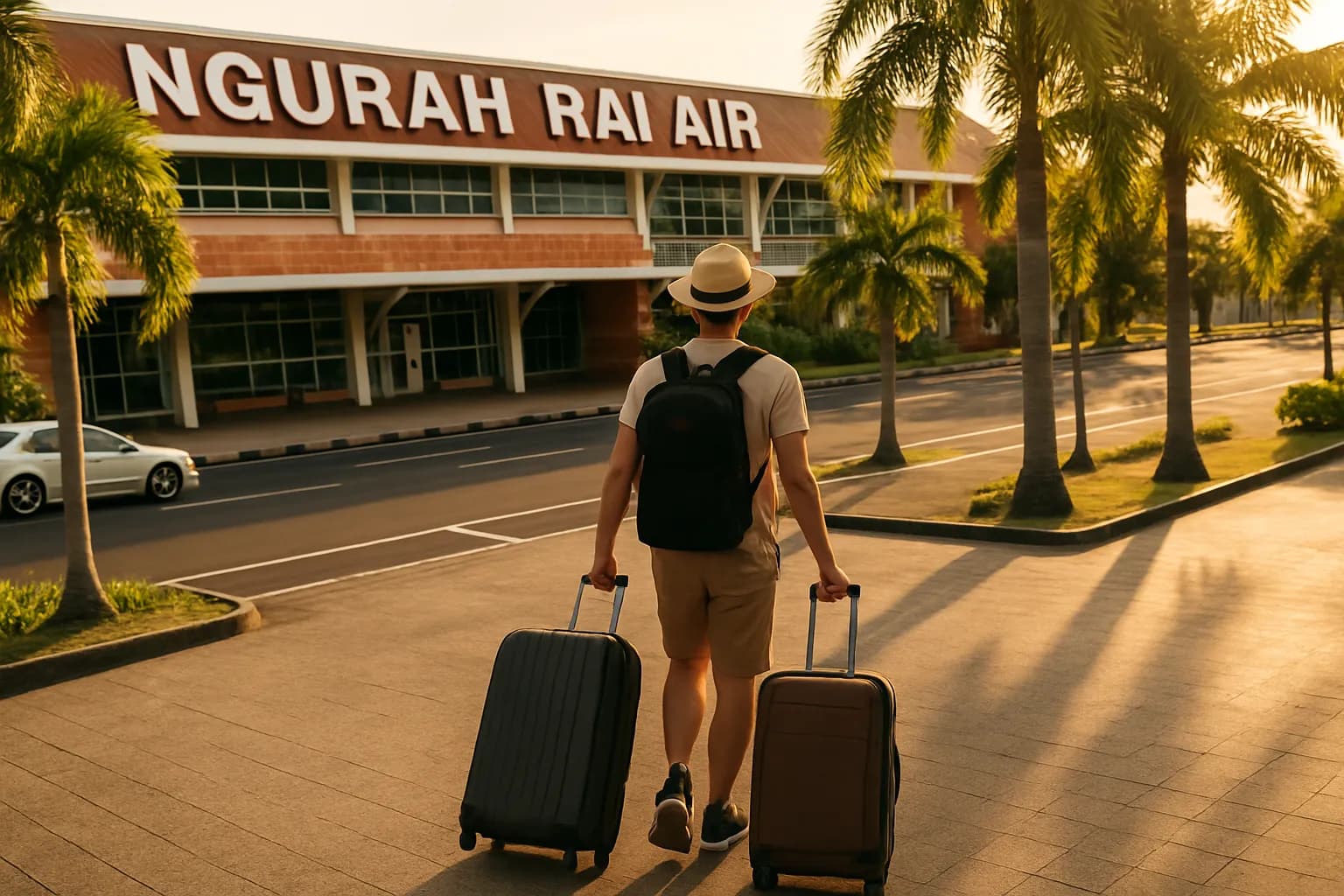
Moving to Bali looks effortless on paper — book a flight, line up an Airbnb, and off you go. The reality has more moving parts. Between the visa clock, the lease you sign by hand, the SIM card you actually have to register, the scooter you're better off renting before buying, and the health insurance everyone forgets about until the first accident, there are about twenty decisions to make in the right sequence. This guide is the honest roadmap: the stuff we wish someone had told us before we landed at Ngurah Rai.
Before you arrive: visa, budget, mindset
The visa is brick number one
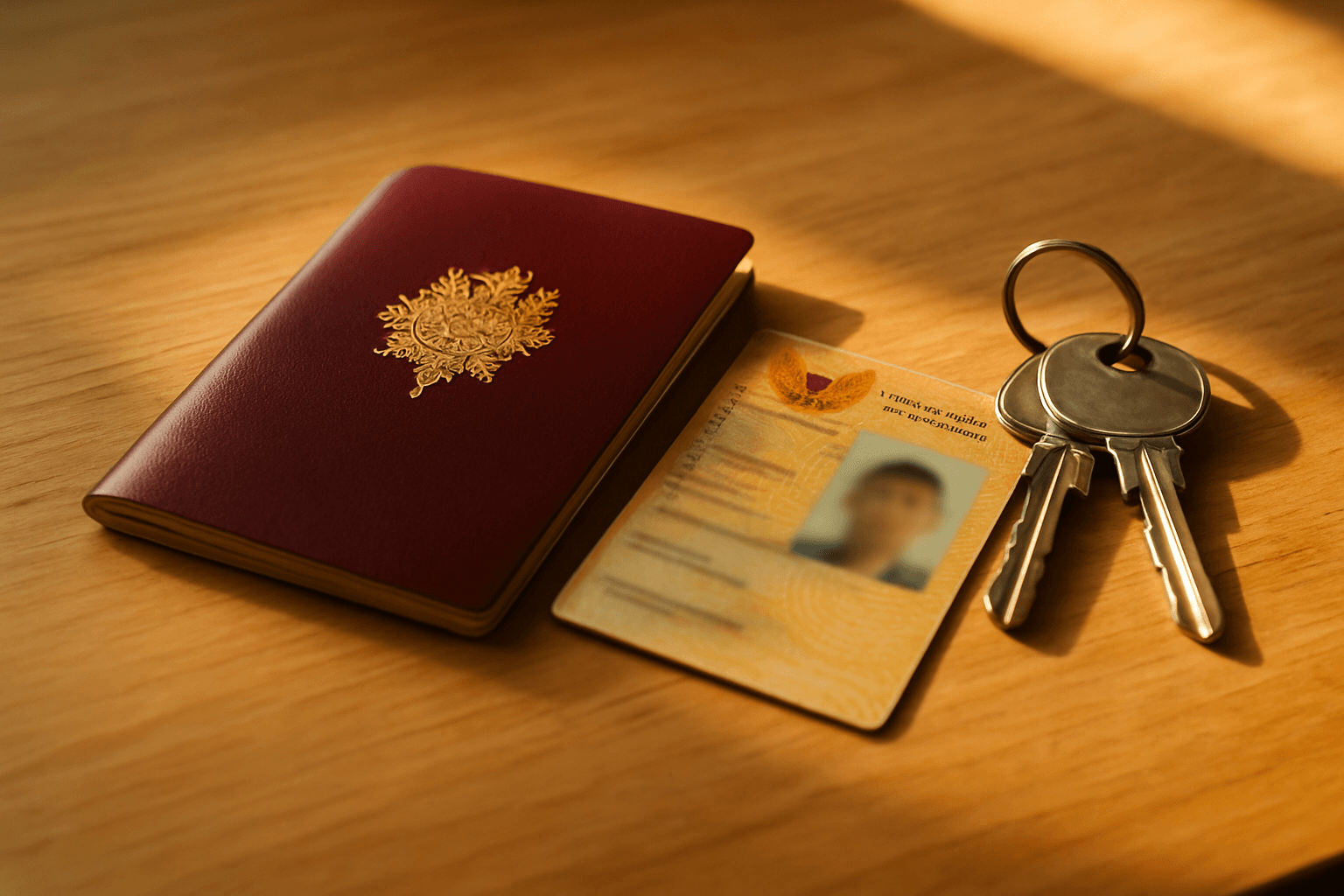
Sort your visa before anything else. The C1 visa — officially renamed in late 2024, though everyone still calls it the "B211A" — is the simplest gateway for a first stay. It grants 60 days, extendable twice for 60 days each, for a maximum of 180 days on the ground. Since 2025, in-person biometrics are mandatory at every extension: you show up at the immigration office and they take your fingerprints and photo. Going through an agency, budget roughly 130 to 160 GBP for the initial visa, plus a fee per extension. A sponsor (the agency) is required for this visa — never sign anything blind, and always work with a provider with a solid local reputation. Visa categories, conditions and official procedures are published by the Indonesian Directorate General of Immigration (imigrasi.go.id), the only source that actually counts.
To stay beyond six months, you move into a different category:
| Stay permit | Who it's for | Indicative cost / deposit |
|---|---|---|
| C1 visa (ex-B211A) | First stay, low-key remote work | ~130-160 GBP initial via agency |
| Investor KITAS | Setting up / investing in a PT PMA | 1,500-4,000 USD via agency (PT PMA capital 1 billion IDR) |
| Second Home Visa | Long stay without working locally | Blocked deposit of 2 billion IDR |
| Spouse KITAS | Married to an Indonesian national | Varies by agency |
The KITAS has one practical perk most people miss: it counts as a local driving licence at roadside checks, which makes daily life noticeably easier.
The real budget
Forget the "Bali on 800 quid a month" promises. For a solo expat living comfortably in Canggu or Seminyak, a realistic budget runs 1,800 to 2,500 USD a month, rent included. In Ubud you can shave 30 to 40% off that. This figure covers a decent villa, the scooter, eating out often, coworking, and a buffer for the unexpected (and there's always something).
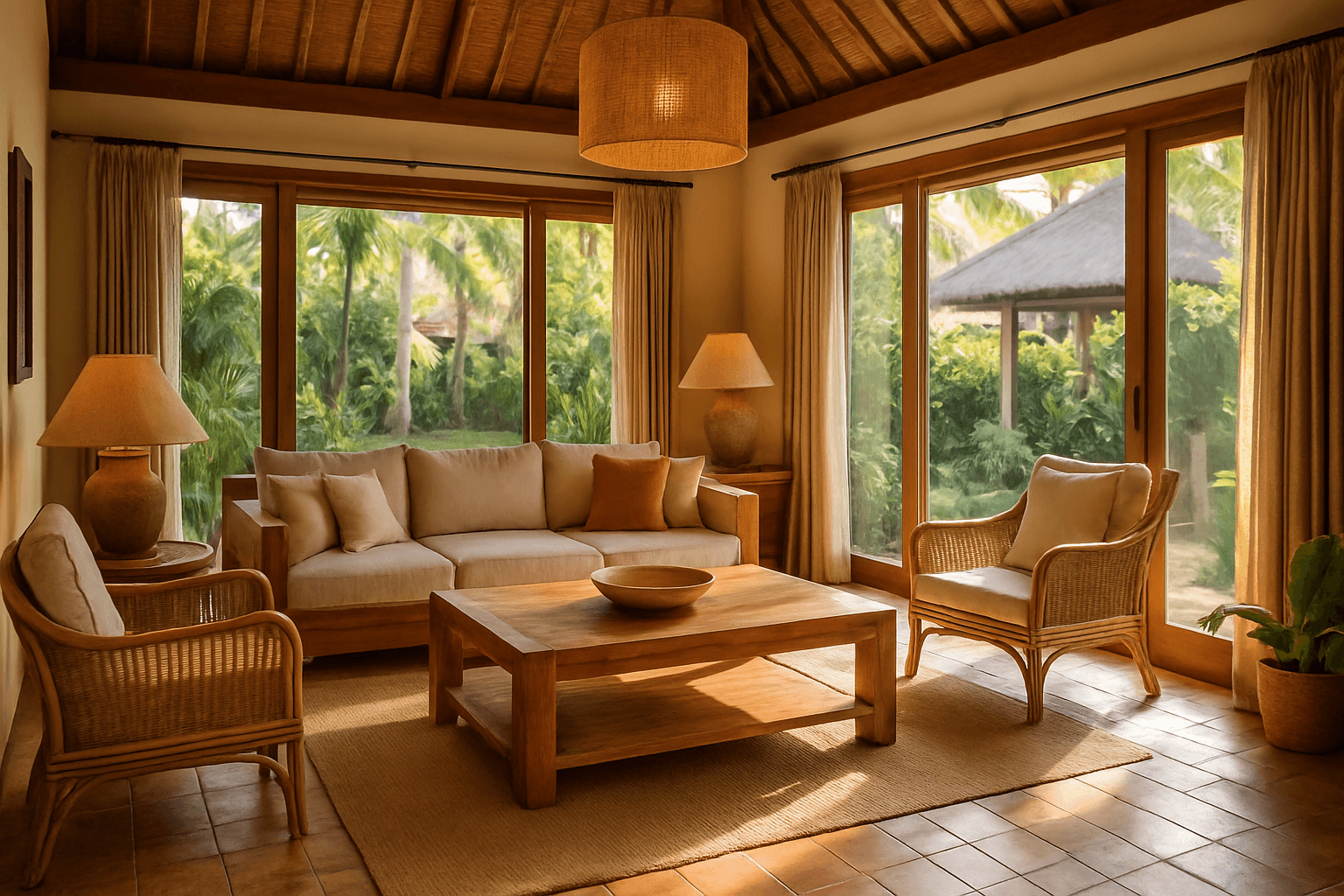
Book short-term accommodation (Airbnb, guesthouse, hotel) for 2 to 4 weeks first. Never sign a long lease from overseas without viewing in person: photos lie, the racket from roosters and construction sites doesn't carry online, and you can't see the damp in a north-facing bedroom from a listing either.
Your first 10 days on the ground
This is the pure logistics phase. Here's the order that works:
1. Local SIM card. Get Telkomsel (best coverage across the whole island); your passport is required. A 25 GB plan easily covers a month of normal use. XL Axiata is a cheaper alternative, but coverage is patchier once you leave the tourist zones.
2. Money. If you're staying under six months, you don't need an Indonesian bank account: a multi-currency Wise card plus ATM withdrawals will do. Stick to ATMs at the big local banks (BCA, BNI) — they're more reliable and often skip the surcharge. Note the per-transaction withdrawal caps: BCA ~2.5M IDR, Permata ~3M IDR. For a long stay, open a BCA or Permata account (a KITAS makes this far smoother).
3. Scooter. RENT first, don't buy. Budget 1 to 1.5M IDR a month for a long-term rental, or 60,000 to 150,000 IDR a day short-term. On the legal side, there's no wiggle room in 2026: you need an International Driving Permit (IDP) with the category A stamp (two-wheelers) — the category B stamp (car) does not cover you — plus a helmet. The IDP is only valid as long as your home licence is.
4. Insurance and a go-to clinic. In your first week, scope out an international clinic in your neighbourhood and take out proper health insurance (more on this below). Don't wait for the accident.
The 2026 scooter trap: zero tolerance
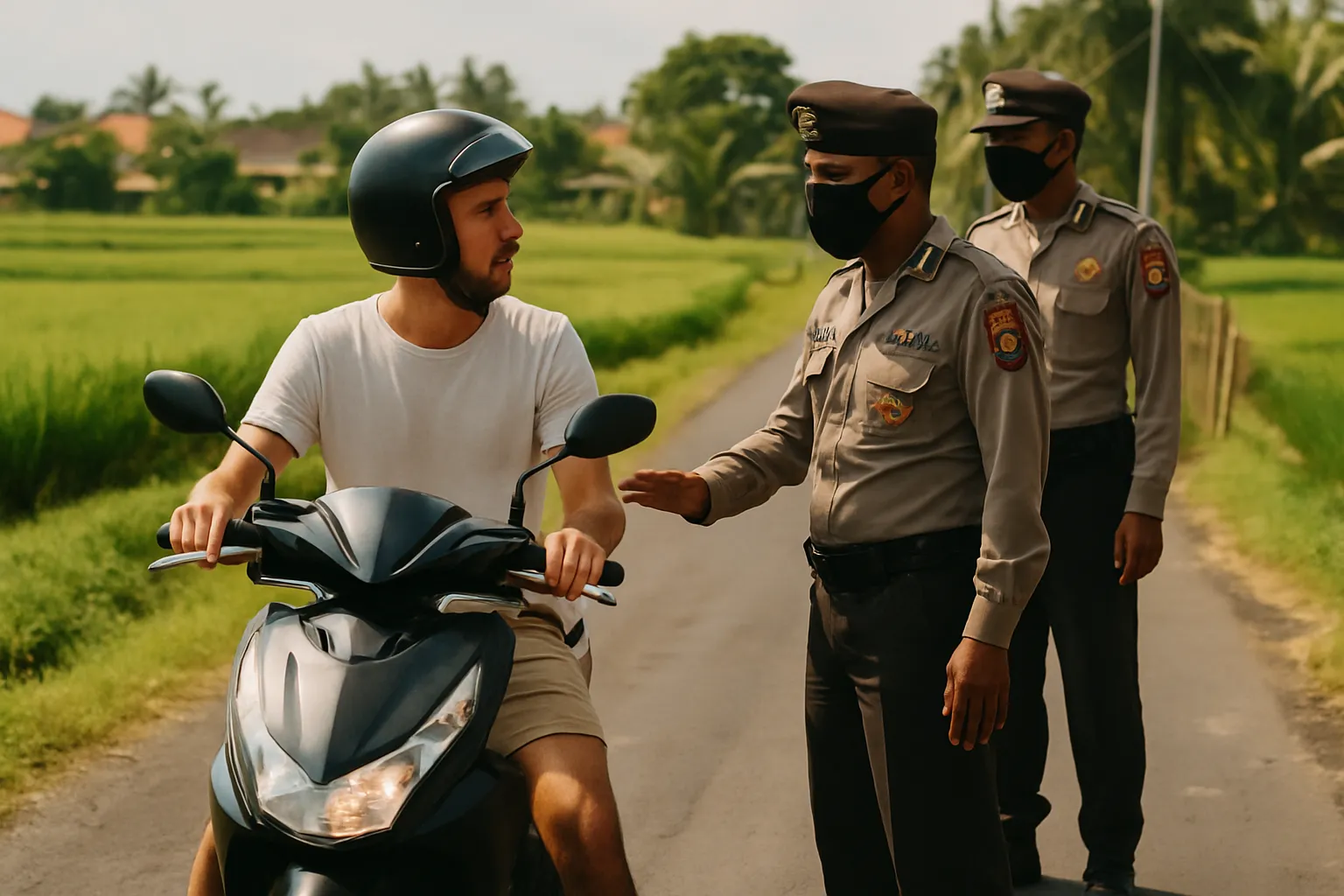
This is what's changed. The Dharma Dewata task force, rolled out from April 2026, runs a zero-tolerance policy: frequent stops, systematic checks of helmet, licence and paperwork. Riding without an IDP category A stamp exposes you to fines, to complications with your insurer if you crash, and to awkward situations on the roadside. The rule is simple: motorcycle licence + IDP category A stamp + helmet, or you don't ride. Plenty of expats buy their first second-hand scooter from each other once they're settled; on Lokalfinds you'll regularly find scooters passed on by residents heading home, often well-maintained and cheaper than the dealers.
Long-term accommodation: where and how much
Villas are traditionally rented by the full year, paid upfront, sometimes negotiable down to six months. It's cultural, and it's your main bargaining lever: a 6-to-12-month lease knocks 30 to 50% off the short-term monthly rate. Never pay without a written contract and without checking the meters (water, electricity), plus the water quality and the pump pressure.
Ballpark for a 1BR villa with a pool in Canggu: 12 to 18M IDR a month short-term, considerably less on a long lease. For a 2BR, the range swings by micro-neighbourhood:
| Neighbourhood (Canggu) | 2BR rent / month (short-term) | Vibe |
|---|---|---|
| Berawa | 2,700-4,500 USD | Lively, cafés, beach, traffic jams |
| Batu Bolong | 2,700-5,000 USD | Heart of Canggu, surf, premium |
| Pererenan | 2,200-4,000 USD | The "new Canggu", quieter, booming |
In Ubud, reckon on 30 to 40% less than Canggu for equivalent standards — jungle, rice fields, calm, but far from the beach.
Neighbourhoods to scout by profile:
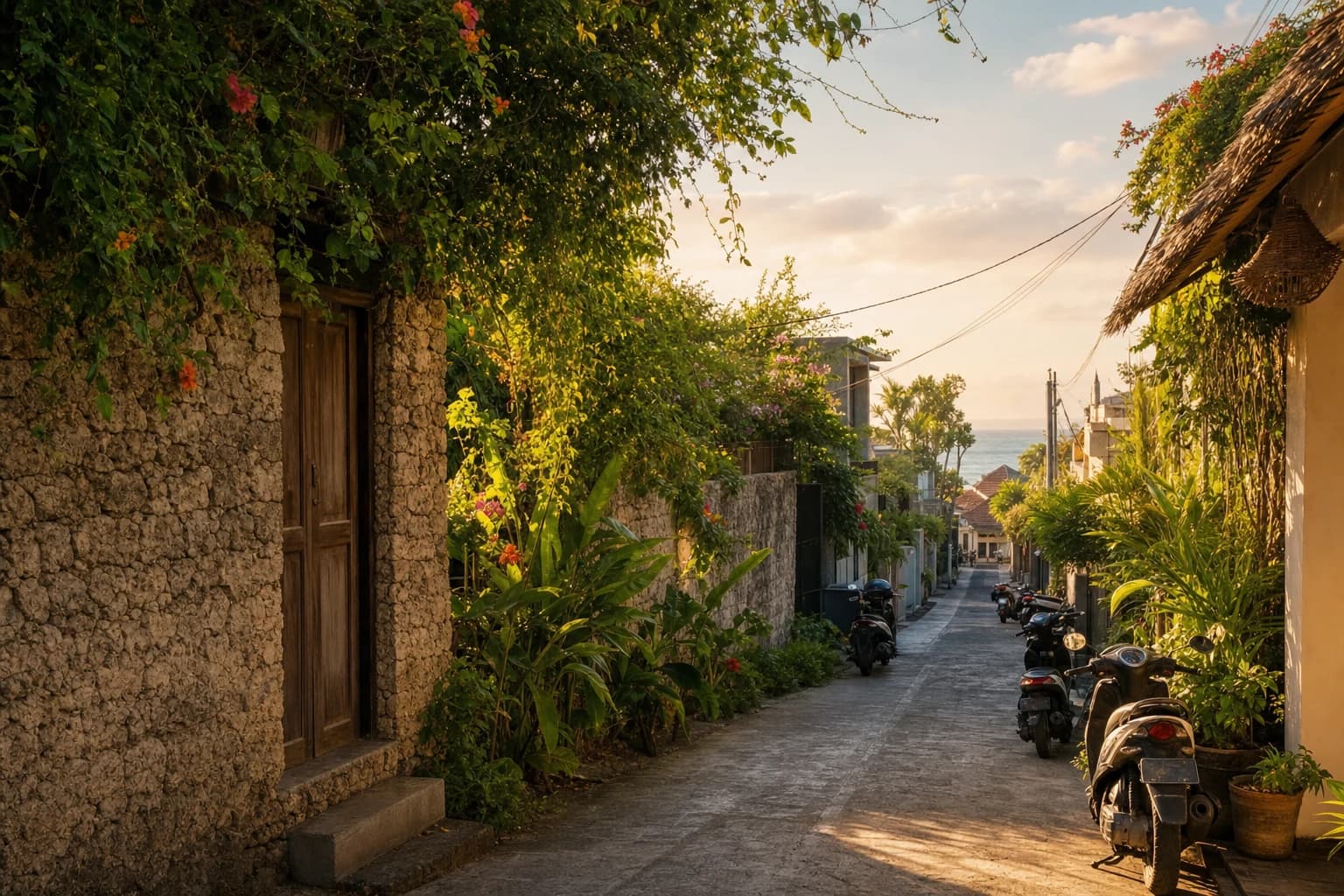
- Canggu — young, surf, nomads, nightlife… and heavy traffic.
- Ubud — nature, yoga, calm, wellness community.
- Uluwatu / Bukit — clifftops, premium surf spots, more remote.
- Sanur — family-friendly, laid-back, calm beach, a more settled crowd.
- Pererenan — Canggu's natural extension, on the up.
To furnish a place without breaking the bank, the second-hand market among expats is buzzing: frequent departures mean near-new furniture going for a song. That's exactly what Lokalfinds pulls together for the Bali community — furniture, appliances, scooters, e-bikes — resident to resident, instead of paying import prices for new.
Health: don't gamble with this
Bali's healthcare runs at two speeds. The international hospitals — BIMC, Siloam, Kasih Ibu — offer quality care, English-speaking staff and direct billing with most international insurers, but they charge international rates in USD. A consultation runs around 40 to 100 USD, an ER visit 150 to 650 USD depending on what's done, and a night in a standard room 300 to 500 USD.
The real financial risk is medical evacuation to Singapore if something serious goes wrong: we're talking tens of thousands of dollars (and into six figures for an air ambulance). Hence the golden rule: take out international health insurance with a repatriation component before you ever need a doctor, and call your insurer's 24/7 line before you turn up at the hospital so they can set up the payment guarantee (which saves you fronting a deposit).
Worth noting: if you get a KITAS and stay over six months, enrolment in Indonesia's national health scheme **BPJS Kesehatan** is mandatory for holders of a work stay permit — but it's a complement, not a substitute for proper international cover with repatriation. Before you leave, also check the official health guidance in the Indonesia entry requirements and health advice from the UK FCDO (recommended vaccines, up-to-date health risks).
On the day-to-day side: tap water is not drinkable (use bottled galon water), watch out for "Bali belly" in the first few weeks, and keep a basic medicine kit on hand.
Connectivity and work: coworkings and internet
For anyone working remotely, two questions matter: how good the connection is, and where you actually work.
Internet: in Canggu, the fibre in newer villas commonly delivers 50 to 100 Mbps, fine for video calls and uploads. But the rainy season (November to March) brings outages: keep a Telkomsel data plan as backup and, ideally, pick a place with a solid advertised fibre line.
Coworkings still alive in 2026 (heads up — the landscape has shifted a lot):
| Coworking | Area | Indicative rate |
|---|---|---|
| Setter | Canggu | Premium monthly membership |
| Outpost Ubud | Ubud | ~210 USD/month |
| Tropical Nomad | Canggu | 120-180 USD/month |
| Genius Cafe | Sanur | Day pass ~5 USD |
Several long-standing spots have closed: don't waste time hunting for Outpost Canggu, Hubud (Ubud) or Dojo Bali — they're gone. Always confirm a coworking is still open before you plan your week around it.

What we wish we'd known
- The rainy season changes everything. Roads flood in ten minutes, the internet drops, and damp creeps into the cupboards. Have a backup for your connection and steer clear of signing a poorly insulated villa.
- Learn 20 words of Bahasa in your first week.
Terima kasih(thank you),berapa?(how much?),tidak(no)… It transforms every interaction, and often the price. - Enrol with your home country's consular service. US citizens can sign up free for the Smart Traveler Enrollment Program (STEP) so the U.S. Embassy & Consulates in Indonesia can reach you in an emergency; nationals of other countries have an equivalent registration — it's free, online, and pays off the day something goes wrong.
- Join the expat Facebook/Telegram groups for your neighbourhood. That's where the good leads on housing, scooters and furniture circulate, along with the useful alerts.
- Keep cash on you. Plenty of warungs and landlords take nothing but notes.
- Patience. Settling in takes 2 to 3 months before you feel genuinely at ease. Don't skip steps: visa first, short-term accommodation, then everything else.
Official sources
Stay and health procedures change regularly. Always check the information at the source before acting:
- Indonesian Directorate General of Immigration (imigrasi.go.id) — visas, KITAS and stay permits.
- BPJS Kesehatan — Indonesia's national health insurance (mandatory for holders of a work KITAS).
- U.S. Embassy & Consulates in Indonesia — consular services, including a U.S. Consular Agency in Bali, and STEP enrolment.
- Indonesia travel advice — UK FCDO — safety, entry requirements and health, updated continuously.
Frequently asked questions
Which visa should I choose to move to Bali in 2026?
For a first stay, the C1 visa (the old B211A, renamed in late 2024) is the simplest: 60 days, extendable twice up to 180 days, with mandatory in-person biometrics at every extension. Budget roughly 130 to 160 GBP through an agency. To stay longer or to work/invest, look at an investor KITAS (PT PMA), a spouse KITAS or the Second Home Visa (a 2 billion IDR deposit).
What monthly budget should I plan for living in Bali?
For a solo expat living comfortably in Canggu or Seminyak, reckon on 1,800 to 2,500 USD a month, rent included. In Ubud you can cut that by 30 to 40%. The most variable line is housing: a 1BR villa with a pool in Canggu runs 12 to 18M IDR a month short-term, but 30 to 50% less on a 6-to-12-month lease.
Do I need a special licence to ride a scooter in Bali?
Yes. You need an International Driving Permit (IDP) with the category A stamp (two-wheelers), valid as long as your home licence is, plus a helmet. The category B stamp (car) doesn't cover you. Since April 2026, the Dharma Dewata task force has enforced a zero-tolerance policy with checks and fines. If you hold a KITAS, it counts as a local licence at checkpoints.
Do I need an Indonesian bank account?
Not if you're staying under six months: a multi-currency Wise card and ATM withdrawals at the big local banks (BCA, BNI) will do. Beyond that, or if you want to pay rent and bills locally, open a BCA or Permata account — it's far simpler once your KITAS is in hand.
What health insurance should I get for Bali?
International health insurance with a repatriation/evacuation component, taken out before you arrive. The international hospitals (BIMC, Siloam, Kasih Ibu) bill in USD, and a medical evacuation to Singapore can run into tens of thousands of dollars. Go with an insurer that offers direct billing with these hospitals, and call its 24/7 line before heading to the ER.
Where do I find affordable housing, a scooter and furniture?
For long-term housing, go through the local expat Facebook/Telegram groups and always view before you sign. For second-hand scooters and furnishings, the expat-to-expat market is very active thanks to frequent departures: community platforms like Lokalfinds gather these listings (furniture, appliances, scooters) among Bali residents, often far cheaper than buying new.
How long does it really take to settle in?
Reckon on 2 to 3 months to feel at ease: finding the right neighbourhood, the right long-term place, getting the hang of local driving, building a network. The first few weeks are logistics (visa, SIM, scooter, bank, health); the rest comes with time. Don't rush into a long lease until you've tried out a few neighbourhoods.