In Indonesia, a phone brought in from abroad and fitted with a local SIM card keeps network access for 90 days at most. That ceiling comes straight from the official FAQ of the Directorate General of Customs and Excise (Bea Cukai), which rests on Ministry of Communication regulation No. 1 of 2020. To go beyond it, you have to register the device's IMEI with customs within 60 days of arrival. Miss that window and the FAQ answers with a flat tidak bisa: not possible.
Registration itself is free. What you pay is import duty: 10% customs duty (bea masuk) and 11% effective VAT (12% nominal on a base reduced to 11/12), after an allowance of USD 500 of customs value per passenger. Qualifying for it is another matter: the proof of registration, a QR code, has to be produced no later than 5 days after arrival. For a phone declared at IDR 8,000,000, the simulation published on 1 June 2026 by the business daily Kontan, built on Bea Cukai's own rates, comes to IDR 800,000 of duty and IDR 968,000 of VAT, or IDR 1,768,000 with the allowance not deducted.
No, your phone does not cut out "after a few weeks"
Not one official document we consulted mentions weeks. The Bea Cukai FAQ on IMEI import and registration describes two cases where no registration is needed at all. The first: keep the SIM from your home country, tetap menggunakan SIM card dari negara asal (roaming). The second: use an Indonesian SIM activated in an operator's shop, perangkat HKT wisatawan asing menggunakan SIM card Indonesia… untuk mendapat akses jaringan telekomunikasi paling lama 90 hari, meaning a foreign tourist's device gets network access for 90 days at most. The legal basis cited is Peraturan Menteri Kominfo No. 1 of 2020.
See also: SIM Cards in Bali in 2026: Where to Buy, Which Plan, at What Price
That leaves the misunderstanding that costs the most: 60 days and 90 days do not describe the same thing.
- 60 days = the window in which customs will still register your IMEI. Official wording: paling lambat 60 (enam puluh) hari sejak kedatangan penumpang atau awak sarana pengangkut.
- 90 days = the ceiling on network access granted to an unregistered foreign device through a tourist SIM.
Hence a 30-day red zone. Between day 61 and day 90 the phone still works, but the customs desk can no longer register you. That is exactly why the problem goes unnoticed. Everything looks fine, and the simple route has already closed.
The confusion is not theoretical. The firm Bali Business Consulting writes "you must register your phone within 90 days from the date of your arrival": 90 days to register, where the official text gives 60. Smart Advisory Solutions (SAS Bali) keeps the two apart correctly, with "unregistered phones will cease to function on a cellular network after a period of 90 days" on one side and "it is best to register no later than 60 days after arriving" on the other. Two paid advisers, two readings. All the more reason to go back to the customs text itself.
| Deadline | What it triggers | Type of source |
|---|---|---|
| 5 days after arrival | Last chance to produce the QR code and keep the USD 500 allowance | Bea Cukai FAQ (official) |
| 60 days after arrival | Last chance to register through the customs route | Bea Cukai FAQ (official) |
| 90 days | Maximum network access for an unregistered foreign device (tourist SIM) | Bea Cukai FAQ (official) |
| 1 year | Minimum wait before the allowance is available again | Bea Cukai Kanwil Aceh (official, regional) |
One detail changes how you should handle the risk: no official source we consulted describes the technical mechanism behind the cut-off. The FAQ says only that the Ministry of Industry runs the CEIR database, the central registry of equipment identifiers. Who actually triggers the block, and whether the clock starts on arrival or on first SIM insertion, is not public knowledge. Local firms confirm the effect at 90 days, not the machinery. So treat those 90 days as a ceiling, not as a countdown you can time to the day.
Who has to register, and which devices?
The Bea Cukai FAQ covers passengers, crew members (awak sarana pengangkut) and postal or courier operators for parcels; commercial imports go through a separate declaration. The first category covers nearly every expat.
The devices concerned are listed exhaustively, which is good news for the rest of your bag:
- mobile phones (telepon seluler);
- cellular handheld computers (komputer genggam berbasis seluler);
- cellular tablets (komputer tablet berbasis seluler).
Those three families make up the HKT category in customs jargon. A laptop, a camera or a tablet without a cellular module falls under the general regime for personal effects, not IMEI registration.
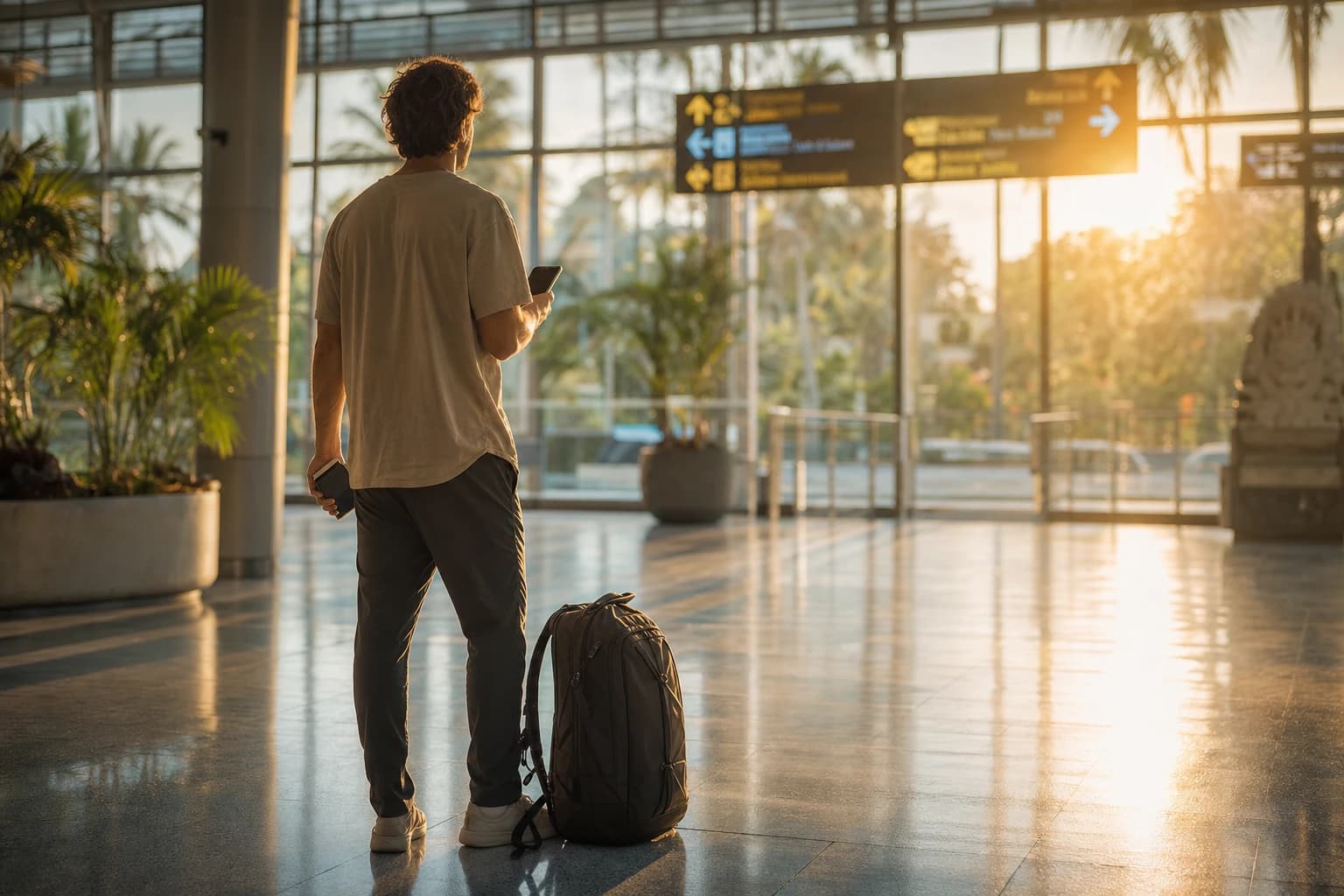
How many devices per person? The sources diverge. Kontan (paling banyak dua unit perangkat HKT), the Bea Cukai Kanwil Aceh FAQ (maksimal 2 HKT dalam 1 kali kedatangan dalam periode 1 tahun) and SAS Bali all give a maximum of 2 devices. Kanwil Aceh frames it as a cap on the allowance rather than a ban on carrying more. The national IMEI FAQ, for its part, explicitly reserves its limit of 2 units for a different regime: khusus impor HKT ke Kawasan Bebas dibatasi paling banyak 2 (dua) unit per orang, HKT imports into a free-trade zone. For an ordinary traveller's luggage it gives no maximum at all; its only condition is personal, non-commercial use. The cautious reading: assume the limit is 2.
What it actually costs
First point, and the most misread: the act of registering is free, pendaftaran IMEI gratis, tidak dipungut biaya, in Kontan's words. What you pay is import duty and tax. If someone invoices you for "the registration", they are billing their time, not a tax.
| Item | Rate / amount | Detail |
|---|---|---|
| IMEI registration | Free | No charge for the act itself |
| Passenger allowance | − USD 500 of customs value | Barang pribadi penumpang, per person and per arrival |
| Crew allowance | − USD 50 | Awak sarana pengangkut |
| Special hajj pilgrim allowance | − USD 2,500 | Jemaah haji khusus, special regime |
| Customs duty (bea masuk) | 10% | Flat rate, passenger baggage |
| VAT (PPN) | 11% effective | 12% nominal, base × 11/12 |
| PPh Pasal 22 (import income tax) | 0.5 to 10% with an NPWP, 1 to 20% without | Application disputed, see below |
One clarification on VAT that heads off a classic error: the IMEI FAQ writes PPN 12% (dengan DPP dikalikan 11/12), while the general import FAQ simply displays "PPN: 11%". It is the same thing said twice. Nominal rate of 12%, base cut to 11/12, effective 11%. Never add the two figures together.
The Kontan simulation, line by line
On 1 June 2026, Kontan published a worked example for a phone declared at IDR 8,000,000:
| Line | Base | Amount |
|---|---|---|
| Customs duty (10%) | IDR 8,000,000 | IDR 800,000 |
| VAT (11% effective) | IDR 8,800,000 (value + duty) | IDR 968,000 |
| Total | — | IDR 1,768,000 |
Two caveats, which the source article owns: the simulation includes neither the USD 500 allowance (it taxes the full value) nor the PPh. It is an order of magnitude for an unfavourable case, not your bill. And Kontan is a newspaper, not the administration. The calculation applies official rates, but it carries no weight as a customs decision.
PPh: two official pages that contradict each other
This is the main grey area. The Bea Cukai IMEI FAQ states that passenger baggage is dikecualikan dari Bea Masuk Tambahan (BMT) dan PPh, therefore excluded from additional duties and from import income tax. The general import FAQ on the same site, the Kanwil Aceh FAQ and Kontan all say the opposite: PPh Pasal 22 applies, at 0.5 to 10% with an Indonesian tax number (NPWP) and 1 to 20% without, with Kontan going for 10% and 20%.
Two official pages, two answers. Settling that is not a guide's job. In practice, the final amount is set by the officer at the desk, who carries out a penelitian dan penetapan harga: inspection of the device, then valuation. Budget for the top of the range, and treat any "all-in total" quoted in advance as an estimate, including the one calculated above.
The "40% / 30% with a KITAS" that agencies keep repeating is a shortcut
Four private firms in Bali print the same figure word for word: 40% tax on the portion above USD 500, down to 30% for a KITAS holder with an NPWP. SAS Bali, come2indonesia, Bali Business Consulting and Gaya Bali Visa all publish it, worked examples included: USD 900 → USD 160 at come2indonesia, USD 800 → USD 120 at Bali Business Consulting.
No Bea Cukai page we consulted mentions those rates. They do, however, rebuild cleanly from the official ones:
- without an NPWP: 10% (duty) + 11% (VAT) + 20% (top-of-range PPh) ≈ 41%;
- with an NPWP: 10% + 11% + 10% (PPh) ≈ 31%.
The arithmetic lines up strikingly well, and that is what makes the shortcut credible. But it rests on the assumption that PPh applies to passenger baggage, which is precisely what the official IMEI FAQ denies. Keep it as a rule of thumb for budgeting, never as an enforceable legal rate. If an agency quotes you 30% "because you have a KITAS", ask for the breakdown. The answer will tell you whether they know their subject.
The 5 days that are worth USD 500
This is where the money is. The USD 500 allowance is not a threshold above which everything becomes taxable. The text says untuk barang pribadi penumpang, nilai pabean dikurangi USD500: the customs value is reduced by USD 500. On a USD 900 phone, the taxable base is therefore USD 400, not USD 900.
You still have to qualify, and the official text is precise about the mechanism: penyampaian bukti QR Code harus dilakukan dalam jangka waktu paling lambat 5 hari sejak kedatangan penumpang, the proof of registration in the form of a QR code must be produced within 5 days of arrival. One exception is written in, apabila penumpang dilakukan karantina masih bisa mendapatkan pembebasan sepanjang tidak melebih 5 hari sejak selesai karantina: 5 days from the end of quarantine, on official supporting documents.
Four versions are nonetheless in circulation:
| Version | Window given | Origin |
|---|---|---|
| Bea Cukai FAQ | 5 days after arrival (QR code) | Official, consulted July 2026 |
| DDTCNews (2022, PER-13/BC/2021) | Before leaving the customs area | Tax media, 2022 source |
| come2indonesia | Before leaving the airport and within 24 hours of arrival | Private provider |
| Bali Business Consulting | Day of arrival only | Private provider |
The only window written into an official text consulted in 2026 is 5 days. The other three come from third parties or from earlier rules, which does not make them wrong: the rule has moved, and an officer can apply a stricter instruction.
The operational conclusion, the only one that holds whichever version is in force: do it at the desk, at the airport, on the day you land. And once the allowance has been used, it only reopens after a year (jeda minimal 1 tahun, Kanwil Aceh FAQ).
Where to register in Bali, in practice
Four official channels: the beacukai.go.id website, the Mobile Beacukai app (Play Store), the desk in the arrivals terminal, and the nearest customs office within the 60-day window. Status is then checked through the "Cek IMEI" tool: dapat dicek melalui website/laman Cek IMEI.
What to have on you at the airport IMEI counter, called a posko IMEI in the Kanwil Aceh FAQ:
- your passport;
- your boarding pass;
- the device itself, powered on and accessible;
- the electronic customs form e-CD, "registrasi IMEI" section, every field filled in.
The officer inspects the device, sets its customs value and applies the allowance: petugas akan melakukan penelitian dan penetapan harga dengan pembebasan USD 500 per penumpang. There is no point declaring a fanciful value. He is the one who fixes the price used.
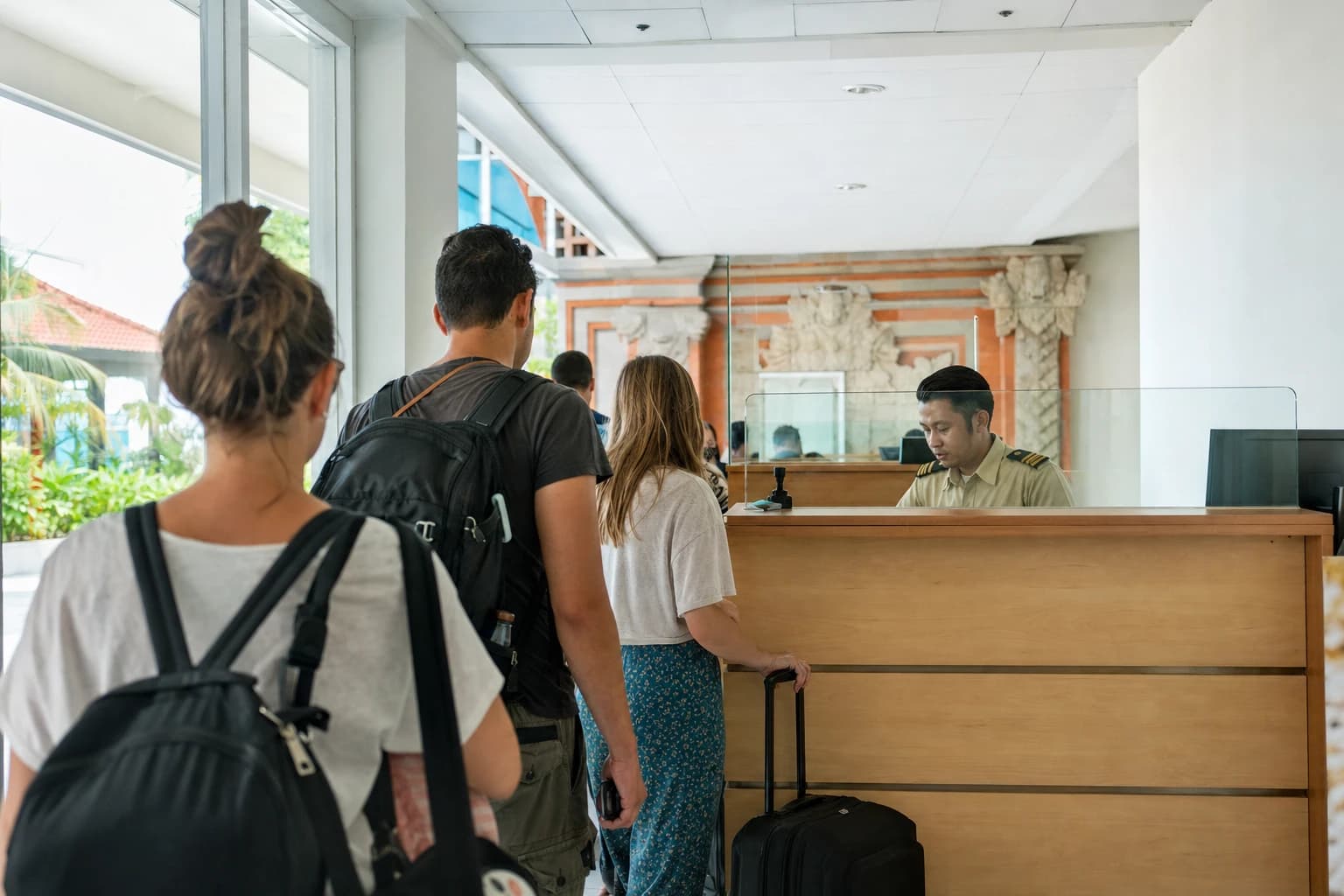
Already out of the airport? The office with jurisdiction is Kanwil Bea Cukai Bali Nusra (covering Bali, NTB and NTT):
- Address: Jl. Airport Ngurah Rai, Tuban, Kec. Kuta, Kab. Badung, Bali
- Phone: (0361) 9354205
- Website: kanwilbalinusra.beacukai.go.id
Bea Cukai's national call centre, quoted in the FAQ itself, is 1500225 (Bravo Bea Cukai). One practical warning: the Kanwil Bali Nusra site points to a registration form hosted on beacukai.go.id that we could not open directly, most likely because of anti-bot protection. Go through the beacukai.go.id home page or the Mobile Beacukai app rather than a URL copied out of a guide, and call before making the trip.
The IMEI checker that half the guides still link to is closed
The imei.kemenperin.go.id portal, on the Ministry of Industry side, is of no use to you: the page now reads kami tutup aksesnya untuk publik, public access closed. It is reserved for registered manufacturers and importers, behind a "Login Perusahaan" area, so they can check the IMEIs they have declared through the product registration system (TPP).
Public checks go through the "Cek IMEI" tool on the Bea Cukai side. Which gives you a simple freshness test: a guide that still points to imei.kemenperin.go.id has not been reread recently, and the rest of it deserves the same suspicion.
Having a phone shipped to you: the maths changes
Ordering the phone abroad and having it shipped to Bali moves you into a different customs regime, less favourable on one decisive point: a parcel does not get the USD 500 allowance, which is attached to the passenger.
| Regime | Customs duty | VAT | Allowance |
|---|---|---|---|
| Passenger baggage (HKT) | 10% | 11% effective | USD 500 of customs value |
| Parcel / courier shipment (FOB value over USD 3 and up to USD 1,500) | 7.5% | 12% | None |
Those rates come from the official Bea Cukai page on barang kiriman, which refers back to ministerial regulation PMK 96 of 2023. A caveat on how to read them: the parcel pages write "PPN 12%" without repeating the 11/12 base that appears on the passenger side. The one-point gap between the two lines may therefore be a matter of drafting rather than a genuine difference. The difference that counts is certain: there is no allowance. The duty rate is lower, but it applies to the full value. Carrying the device in your cabin bag and registering it at the desk remains, in most cases, the cheaper scenario.
Past 60 days: what the sources really say
Here you have to separate two levels of evidence.
The official Bea Cukai FAQ is terse. Asked about registering beyond 60 days, it answers tidak bisa, not possible. It gives no appeal, no fallback ministry, no alternative number; its only contact remains 1500225.
The referral to 159 comes from elsewhere: from DDTCNews, a specialist tax outlet, in an article dated 5 December 2022. It asks the question, lantas bagaimana apabila sampai lebih dari 60 hari sejak kedatangan IMEI belum didaftarkan?, and reports that the customs directorate was advising people at the time to call the call centre of the Ministry of Communication and Informatics (Kominfo, since renamed Komdigi) on 159. The same article notes that a registration carried out outside the customs area tidak mendapatkan pembebasan bea masuk senilai US$500, on the basis of regulation PER-13/BC/2021.
In other words: 159 is a recommendation reported by a media outlet in 2022, not a procedure written into the 2026 customs FAQ. Neither the timeframe nor the outcome is documented. Get the purchase invoice, your passport and your entry stamps together, call 1500225 first to confirm what to do, and see it as a salvage operation, never a plan A.
Buying or selling a second-hand phone in Bali
A device whose IMEI has never been registered eventually loses access to the Indonesian network. It does not turn into a brick, since Wi-Fi keeps working, but it loses what gives it value on the local market: the ability to take an Indonesian SIM.
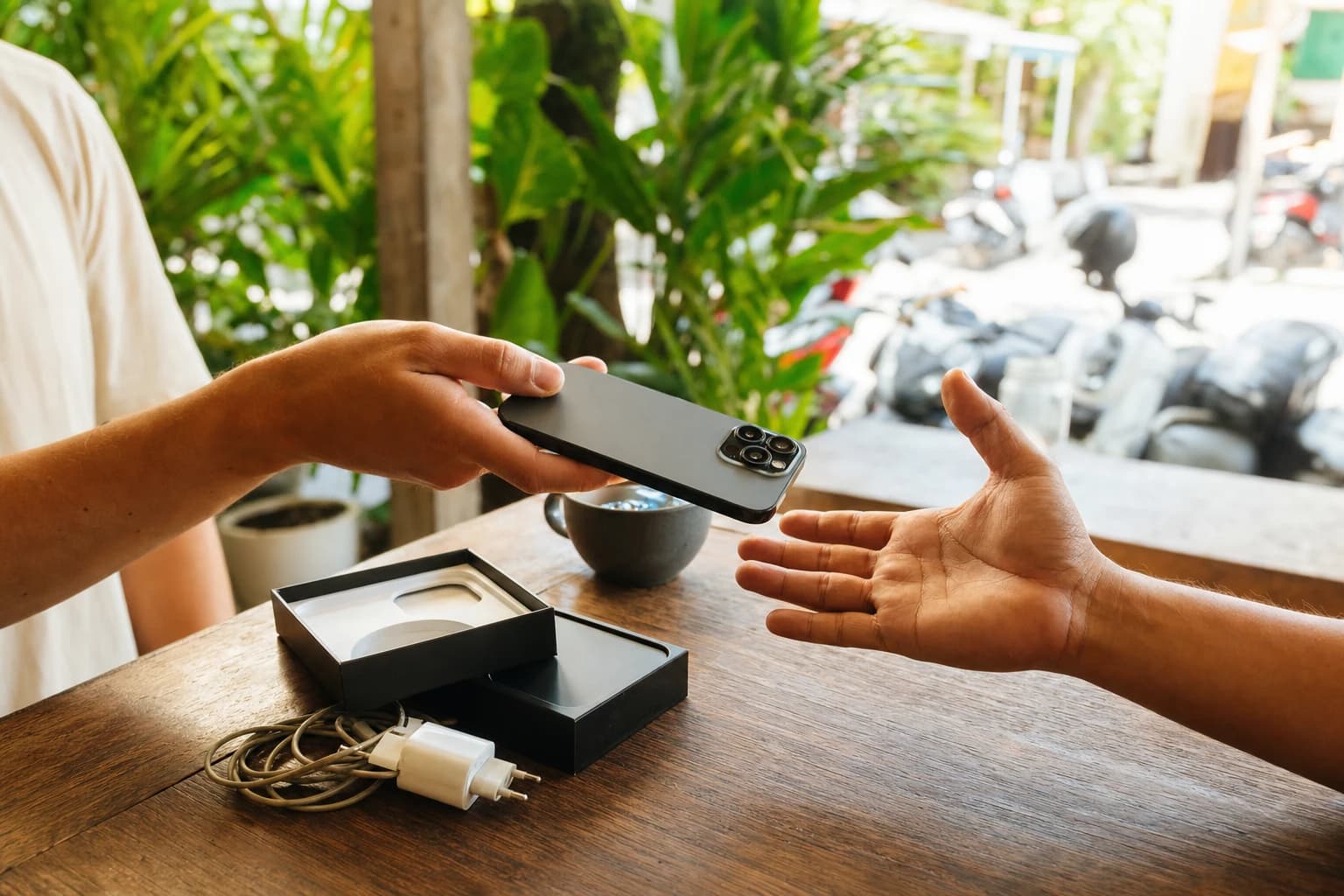
For the buyer, the IMEI plays the same role as the STNK does for a scooter: it is the paperwork that decides whether the object is usable or decorative. Same logic as with the papers on a second-hand vehicle.
See also: What Is Your Used Tech Worth in Bali? The 2026 Resale Grid
Three reflexes before buying a used phone:
- ask the seller to put an Indonesian SIM in it in front of you and make a call;
- dial
*#06#to display the IMEI and compare it with the one on the box; - ask where the device came from: bought in Indonesia from a retailer, or brought in from abroad.
On the selling side, writing "IMEI registered" or "bought in Indonesia" into an Electronics listing removes the buyer's main objection up front, exactly like any well-filled listing.
One caveat, said plainly: no source we consulted documents the transfer of a registered IMEI between owners, or the regularisation of one after the fact by an Indonesian buyer. So treat an unregistered IMEI as a defect to disclose, not a detail to bury.
What the official sources do not say
Three gaps, owned rather than filled in with guesswork: the exact blocking mechanism, beyond the fact that the CEIR database is run by the Ministry of Industry; the fate of a device resold locally; and the volumes, with no recent official figure on how many devices have been blocked.
One last warning, and this one is perfectly documented: the Gaya Bali Visa guide invites readers to go through allindonesia.imigrasi.go.id, an immigration portal, when IMEI is a customs matter. If a provider sends you to immigration for an IMEI, stop right there. To line up your arrival paperwork in the right order, read our guide to living in Bali in 2026.
Frequently asked questions
Do I need to register my IMEI if I am staying in Bali for less than 90 days?
No, not necessarily. The Bea Cukai FAQ lists two cases where no registration is required: keeping the SIM from your home country on roaming, or using an Indonesian SIM activated in an operator's shop, which gives a foreign tourist's device network access for 90 days at most. A short tourist stay therefore falls outside the scheme. Registration becomes necessary as soon as you plan to stay longer, and it then has to be done within 60 days of arrival.
How much does IMEI registration cost in Indonesia?
The act of registering is free, "pendaftaran IMEI gratis, tidak dipungut biaya", in the words of the daily Kontan. What you pay is import duty: 10% customs duty and 11% effective VAT, after deducting USD 500 of customs value per passenger. A phone declared at IDR 8,000,000, with the allowance not deducted, comes out at IDR 1,768,000 according to the Kontan simulation of 1 June 2026.
What happens if I go past the 60 days?
The Bea Cukai FAQ answers "tidak bisa": registration is no longer possible through the customs route beyond 60 days after arrival, and it gives no appeal. DDTCNews reported in December 2022 that the customs directorate was then advising people to call the Ministry of Communication call centre on 159. No source documents the timeframe or the outcome of that step.
Can I register two phones on the same trip?
Kontan, the Bea Cukai Kanwil Aceh FAQ and SAS Bali all give a maximum of two HKT devices per person and per entry, with Kanwil Aceh framing it as a cap on the allowance. The national IMEI FAQ reserves its two-unit limit for imports into a free-trade zone and gives no maximum for an ordinary traveller's luggage. The sources diverge: treat two as your working ceiling, for strictly personal use.
Does roaming avoid IMEI registration?
Yes, according to the Bea Cukai FAQ: keeping the SIM card from your home country, "tetap menggunakan SIM card dari negara asal (roaming)", is one of the two cases where no IMEI registration is needed, the other being an Indonesian SIM activated in a shop for a maximum of 90 days. It is a short-stay solution: beyond that, compare the real cost of roaming with the import duty.
Where do I register my IMEI in Bali?
Four official channels: the beacukai.go.id website, the Mobile Beacukai app, the desk in the arrivals terminal, or the nearest customs office within 60 days. In Bali, the office with jurisdiction is Kanwil Bea Cukai Bali Nusra, Jl. Airport Ngurah Rai, Tuban, Kuta, Badung, (0361) 9354205; the national call centre is 1500225. The arrivals desk remains the safest option for keeping the allowance.
Can a phone with an unregistered IMEI be resold in Bali?
Only with difficulty. The device loses access to the Indonesian network beyond 90 days, and with it most of its local usefulness, even though it still works on Wi-Fi. No official source we consulted describes any way for a buyer to regularise it after the sale. Practical rule: state the IMEI status and where the phone came from in the listing, rather than leaving the buyer to find out.
Sources
Official Indonesian sources:
- Bea Cukai — FAQ Impor & Registrasi IMEI — the pivot source: 90 days of network access (Kominfo regulation No. 1/2020), 60 days to register, QR code within 5 days, allowances of USD 500 / 2,500 / 50, 10% duty, 12% VAT on an 11/12 base, exclusion of PPh, "tidak bisa" beyond 60 days, call centre 1500225.
- Bea Cukai — FAQ Impor (general) — independent confirmation: 10% flat BM, 11% PPN, PPh 0.5 to 10% / 1 to 20%, allowances of USD 500 and 50.
- Bea Cukai — Barang Kiriman — shipments: 7.5% bea masuk and 12% PPN for an FOB value over USD 3 and up to USD 1,500 (PMK 96/2023).
- Bea Cukai Kanwil Aceh — FAQ barang penumpang — procedure at the posko IMEI, IMEI section of the e-CD, cap of 2 HKT, allowance reopening after 1 year.
- Bea Cukai Kanwil Bali Nusra — the office with jurisdiction over Bali, NTB and NTT, address and phone number.
- Kemenperin — IMEI checker — closure of the old portal to the public.
Specialist press:
- Kontan (01/06/2026) — business daily: free registration, limit of 2 devices, PPh 10% / 20%, simulation of IDR 8,000,000 → IDR 1,768,000.
- DDTCNews (05/12/2022) — tax media: loss of the allowance outside the customs area (PER-13/BC/2021), the 60-day deadline, the referral to 159. A 2022 source, to be cross-checked against the current FAQ.
Private providers cited as objects of analysis, not as authorities — their 40% / 30% rates appear in no official text we consulted: SAS Bali (03/06/2024), come2indonesia, Bali Business Consulting, Gaya Bali Visa.
Written on 22 July 2026 from official Indonesian sources consulted on that date. Rates, deadlines and addresses can change: check with Bea Cukai before starting any procedure. Informational content, not customs or tax advice.